

Cyber Security and Resilience Bill "lacking in ambition"
Recently we held the second reading debate on the Cyber security and Resilience Bill which is designed, post Brexit, to update our cyber regulations. Almost everyone who spoke in the debate was of the view that it does not go far enough in meeting the cyber threats that the UK faces. This is an edited version of what I said.
My Lords, first, I declare an interest as an adviser to DLA Piper on AI policy and regulation. I should also say that we as a law firm were subject to a ransomware attack by NotPetya back in 2017. It was not a pleasant experience.
I thank the Minister for her introduction and earlier engagement on the Bill and thank all noble Lords who spoke today in such an expert fashion. On these Benches, like many other noble Lords, we support the fundamental objectives of this legislation to modernise our outdated cyber security framework. But what has been remarkable today is the consensus across the Benches that the Bill is not nearly ambitious enough. Indeed this could be a missed opportunity to align much more closely with the EU framework.
Where is the strategy? Where are the underderlying principles? Where is the plan of action? There is quite a bit missing from the Bill, and I shall take noble Lords through some of those areas.
The threat landscape has deteriorated sharply. The National Cyber Security Centre has managed 204 nationally significant incidents in a single year, double the year before. Yet the Bill will apply directly to only a tiny minority of organisations; meanwhile, 43% of UK businesses have experienced a cyber breach in the last 12 months. One of the most glaring omissions is the almost entire exclusion of the public sector. Central government, public administrations and local authorities are almost entirely exempt from the Bill’s direct statutory duties.
How can we claim national resilience when the state itself is exempt? We have seen the data of 270,000 military personnel compromised in the Ministry of Defence hack, and the devastating attack on the British Library, which destroyed irreplaceable data. Local authorities hold vast repositories of citizen data, from electoral registries to social care records. The ransomware attack on Redcar and Cleveland cost £10 million, the one on Hackney £12 million
We must make cyber security a boardroom issue. Only 27% of businesses now have a board member explicitly responsible for cyber risk, down from 38% three years ago. Unlike the EU’s NIS2, the Bill fails to mandate executive responsibility. We must now extend corporate financial audits to report on how an organisation and its suppliers manage cyber security using existing governance codes.
The urgency here is multiplied by the rapid rise of agentic artificial intelligence. This is a major omission.
Anthropic recently withheld wide release of its Mythos model because it could autonomously find and exploit software vulnerabilities across every major operating system. The UK’s own AI Security Institute, as we have heard, found Mythos substantially more capable at cyber offence than any model previously assessed, and warned that frontier AI capability is doubling every four months. Of course, that will be further amplified by quantum computing.
The EU’s AI Act already imposes binding cyber security and incident reporting duties on the handful of frontier model providers that it judges to pose systemic risk. California and New York do the same for the largest developers. This Bill, by contrast, does not mention AI systems at all, as many noble Lords have pointed out. Last month, the cyber security agencies of the Five Eyes alliance, including our own National Cyber Security Centre, issued a joint statement warning that frontier AI is shrinking the gap between vulnerability discovery and exploitation from months to a matter of days, and this can no longer be treated as a technical issue rather than a leadership responsibility.
Meanwhile, our own defenders have a skills crisis. ISC2 warns that 88% of UK cyber professionals have experienced a breach in the last 12 months as a direct result of skills shortages, yet Clause 43 references “a skilled person”, who must liaise with the Secretary of State during national security directions, without defining what “a skilled person” is.
Who will actually enforce the rules? The Bill distributes duties, as we have heard today, across 12 separate sectoral regulators, many of which, such as Ofwat, already struggle to regulate their own domains. This fragmented approach guarantees duplication and gaps. I agree with the Joint Committee on the National Security Strategy: the UK needs a single expert or lead regulator-to oversee both public and private sectors. Failing that, the Government should at least adopt the EU’s Digital Omnibus model of a single report-once portal.
We must fix the Bill’s definitions. For instance, techUK warns that the current definition of a managed service provider is dangerously broad, risking capture of any basic IT support in the country.
The Bank of England’s own data shows that just three US giants control 73% of the cloud computing services supporting UK financial firms. A number of noble Lords raised the issue of cyber sovereignty. The Trump Administration blocked European and UK firms from accessing Mythos. If a foreign ally can pull the plug on a critical cyber security tool overnight, how can this Government claim true national resilience? That is why, as many noble Lords today have said, we need a comprehensive digital sovereignty strategy. My noble friend Lady Ludford called this “servitude” and the noble Baroness, Lady Berger, talked about "critical dependency". We need to assess our foreign policy dependencies and support domestic UK providers.
The Bill is silent on cyber-enabled fraud, which costs our economy billions of pounds every year and exploits precisely the same weaknesses this Bill is meant to fix. There is a related threat which is emerging, as Thales has tracked, that automated bot traffic has overtaken human traffic online for the first time. As suggested by the NMA, we need the Secretary of State, under this Bill, to assess the cyber security risks that anonymous bot traffic poses to UK websites.
If we expect businesses to defend themselves, we cannot handicap our own cyber professionals. I welcome what has been said by a number of noble Lords on the question of the Computer Misuse Act, which badly needs amending.
Finally, in the face of autonomous AI threats, the Government need an ultimate backstop. We support proposals from ControlAI to introduce strictly constrained last resort powers, allowing the Secretary of State to direct the shutdown of data centres or AI systems in a catastrophic emergency. The cost of inaction vastly outweighs that compliance burden. Jaguar Land Rover, lost around £500 million in a single attack. But currently JLR sits entirely outside the scope of the Bill, as does the retail sector, as a number of noble Lords have pointed out. That is true too of the insurance sector.
The Bill is a necessary foundation. In Committee, we will push hard for amendments to reflect the changes that are needed. In this way, we can ensure that our national cyber defences are genuinely whole of society and fit for the age of AI. We are going to have a very well-informed Committee; I hope the Minister is looking forward to it.

The UK must deliver a clear and actionable space strategy and, in the words of the report, act now before we lose out.
We recently debated an excellent report by a House of Lords Special Enquiry Select Committee, the Engagement with Space Committee. This is what I said.
My Lords, as a former member of the committee—all of us, I suppose, could be described as space cadets—I warmly thank the noble Baroness, Lady Ashton of Upholland, for her superb chairing of the committee and for her inspiring introduction today. I join her and other members of the committee in thanking all the staff and advisers to the committee, and all our evidence givers, including the celebrities that the noble Baroness mentioned. I also thank all noble Lords who have contributed so enthusiastically to this extremely illuminating debate.
As the noble Baroness, Lady Stowell of Beeston, said, the title of the report absolutely captures the challenge. It serves as both a stark warning and a brilliant road map for our future. As we have heard today, the UK space sector is an invaluable national asset. It generates nearly £19 billion a year in income, directly employs over 52,000 people in highly skilled jobs and underpins approximately 18% of our entire
GDP—some £364 billion. We possess immense comparative strengths that we must champion, from Glasgow, which builds more small satellites than anywhere else outside California, to our pioneering in-orbit servicing, assembly and manufacturing—ISAM—sector. We also boast unique downstream advantages, with the City of London primed to be the pre-eminent global centre for space finance, law and insurance.
As we have heard today, the UK space sector is an invaluable national asset, but we must not be complacent: the hard data shows that the UK’s global market share in space has fallen from 5.1% in 2020 to just 4.2% in 2023. We are sliding backwards because our nearest competitor nations are aggressively ramping up their public investments while the UK relies on short-term, fragmented funding cycles. As we consider these economic opportunities, we must be clear-eyed about the intense international competition that we face, particularly the overwhelming dominance of the United States. The recent record-breaking IPO of SpaceX vividly illustrates the sheer scale of American financial and industrial might in this domain.
The noble Lords, Lord Willetts and Lord Shamash, and the noble Baronesses, Lady Ashton and Lady Mobarik, have talked about the importance of sovereign UK launch capability. The committee’s report was right to warn that the UK and the rest of the world have become dangerously overreliant on a single commercial entity for orbital launch and satellite communications. This is a profound strategic vulnerability. We cannot simply outsource the resilience of our critical national infrastructure to a single overseas monopoly, nor to the unpredictable political and commercial whims of one billionaire. This stark reality underscores exactly why the Government must step up as an anchor customer to help our own domestic firms scale up and why we must urgently pool our sovereign capabilities with our European partners.
To truly grasp the scale of this domestic opportunity, we need only to look at our world-leading capabilities in earth observation, which were focused on in particular by the noble Lord, Lord Lansley. Satellite data is rapidly becoming the new gold of the global economy. Earth observation is vital for monitoring climate change, tracking deforestation, predicting natural disasters and enabling precision agriculture. Yet, as the committee heard, adoption of these services outside the space sector remains far too slow because many organisations still view space as complex or irrelevant.
This is exactly where the Government must step in. By acting as a smart procurer, buying earth observation data to improve our own public services, whether for national flood mapping, monitoring coastal erosion or infrastructure planning, the Government can act as an anchor customer. This would immediately de-risk private investment, help our innovative SMEs to scale up and ensure that the UK captures its rightful share of this market. I very much appreciated what the noble Baroness, Lady Stowell, said on the whole scale-up aspect.
But space is no longer just an economic frontier. It is, as many noble Lords said, a critical national infrastructure. It is increasingly congested, contested and competitive. Our national security and resilience
rely heavily on the space domain, from tracking climate change to the vital encrypted communications provided by our Skynet military satellites. To secure these economic and security benefits, the committee’s message is unequivocal: the UK Government must provide a coherent, funded strategic direction. Industry is crying out for the Government to pivot from being a small-scale grant funder to acting as a reliable, smart anchor customer. Procurement contracts, rather than just R&D grants, as noted by the noble Baroness, Lady Ashton, are essential to de-risk projects, crowd in private capital and help our brilliant SMEs to scale up into globally competitive businesses.
Yet the Government’s official response to this excellent report is frankly lacking in the urgency required. Instead of publishing the detailed national space capability development plan that the sector needed and which the committee demanded by the end of 2025, the Government deferred the hard details to a spring space publication, as described by the noble Lord, Lord Lansley. Now it seems that they have promised a plan for space for later this year. Can the Minister confirm exactly what is intended? This deferral of decisions is simply not good enough. As Professor Sylvester Kaczmarek powerfully highlighted in his recent briefing to Peers, deep tech firms cannot scale their businesses on what are described as future documents. The Government’s response offers process when industry desperately needs delivery.
I therefore press the Minister on three specific matters. First, given the Government’s insistence on absorbing the UK Space Agency into DSIT, will they urgently publish a clear accountability map so that industry knows exactly who owns strategy, procurement and regulation across Whitehall? Secondly, when will the Government publish a concrete procurement route that includes specific targets for SME participation? Thirdly, how do the Government plan to create an open assurance pathway for the complex AI-driven autonomous missions of the future? If we want to lead the world in active debris removal, so positively mentioned by the noble Viscount, Lord Stansgate, and the noble Baroness, Lady Bennett, and secure space operations, we must have the regulatory frameworks to prove that these AI systems are trustworthy and secure.
I am afraid that the Government’s response to this committee is characterised by a failure to grasp the nettle. They have not only absorbed the UK Space Agency into a Whitehall department but explicitly rejected the committee’s sensible recommendation to appoint a dedicated Minister for Space to drive cross-government co-ordination.
We on these Benches align very closely with the committee’s recommendations. On European co-operation, the committee rightly called for urgent decisions on our participation in flagship EU programmes such as Galileo and IRIS2 to provide industry with certainty. The Government have stated that they cannot make decisions yet. We are clear that we must pool our sovereign satellite navigation capacity by fully rejoining the Galileo system and confirming our participation in IRIS2. We cannot rely solely on foreign-owned systems for our critical position, navigation and timing needs.
On governance and strategic focus, the committee explicitly warned against the fragmentation of space policy across Whitehall and expressed deep concern over the absorption of the UK Space Agency into DSIT. We on these Benches believe that this merger is a strategic error. Why are the Government dismantling the autonomy of our national space agency at the very moment that it is proving its commercial worth? An independent UKSA is crucial to present a unified interface with the European Space Agency, maintain specialised technical focus, and champion UK interests internationally. We continue to call on the Government to reverse that decision.
We must tackle the skills gap mentioned by a number of noble Lords with genuine ambition, which includes implementing broader reforms to the apprenticeship levy to allow space firms the flexibility they need for responsive training and microcredentials. We cannot maintain our leadership on deferred decisions and structural dilution, so I urge the Minister to take the bold decisions identified by the committee, deliver a clear and actionable space strategy and, in the words of the report, act now before we lose out.

Parliamentarian Lord Tim Clement-Jones highlights the growing impact of technology in politics across his career

On 22 September 2026, Computer Weekly turns 60. To mark the milestone, we asked some of our friends - experts, parliamentarians, IT leaders and suppliers - for their perspectives on how tech has changed their lives over six decades. What's changed the most for you since then?
As Computer Weekly celebrates its 60th anniversary this September, I find myself reflecting on a lifetime shaped by the digital age.
My connection to technology predates my own life. My parents met while serving at Bletchley Park during the Second World War. Knowing they were stationed at the very genesis of modern British computing, I came to appreciate technology’s power to change the course of history, but in combination with some very skilled humans - Churchill’s “geese that didn’t cackle”.
The personal enabling of life through the computer came later - and it was genuinely transformative. I still vividly remember being the proud possessor of a BBC Micro, which, despite its limitations, delivered what seemed miraculous at the time when we were setting up my late wife Vicky’s cancer information charity, later CancerBACUP, now part of Macmillan Cancer Support.
A key moment came in the mid-1980s, when I was legal director at hospitality conglomerate Grand Metropolitan. My first work computer was a Compaq “portable” - about as heavy as a sewing machine. It was neither elegant nor convenient, but it felt entirely revolutionary. I remember thinking: this changes everything.
Later, at home, buying an Apple Mac Classic only deepened the fascination. These were not just tools. Having worked at Letraset in the 1970s, I understood its revolutionary impact on graphic design, not least for political leaflets. This was potentially an engine of personal and professional liberation.
That word - liberation - is deliberate. My political philosophy has always been based on Ralf Dahrendorf’s concept of “life chances,” which he set out in his 1974 Reith Lectures. Dahrendorf spoke of the combination of “options” - the choices available to us - and “ligatures” - the social connections that give those choices meaning.
Life chances
I joined the Liberal Party in 1973 because it espoused a society where no one is enslaved by poverty, ignorance, or conformity. In those early decades of the digital revolution, I saw technology as an important expander of life chances. The internet, in particular, felt like the great democratiser - a force that could level the playing field between the powerful and the powerless.
My professional contact with the edge of technological disruption came as head of legal services at London Weekend Television between 1980 and 1983. I wrote about the emerging legal wild west of cable and satellite television long before the internet arrived. We were wrestling then with transnational signal relays, copyright protection, and the harmonisation of European standards. When Napster arrived at the turn of the century, followed by file-sharing, iTunes, and eventually Spotify, I recognised the pattern immediately.
The case for UK sovereign technological capability has deeper roots than the recent debate over US tech dominance might suggest. With the backing of advisors such as myself, Paddy Ashdown - in his early days as an MP, before becoming the first Liberal Democrat leader after the merger of the Liberal Party with the SDP - challenged the way American extraterritorial reach under the Export Administration Act was compelling British firms to seek US permission before re-exporting or even relocating US-origin computer equipment, regardless of where it sat or who owned it.
Four decades on, the dynamic we identified has become even more pronounced. Reliance on US hyperscalers for cloud infrastructure, US-designed chips for AI compute, and American platforms for critical public services means the leverage Ashdown warned against is now baked in. The drive towards domestic AI capacity, open standards, and national compute infrastructure is the answer to the question he put to government then - and which deserves a clearer answer now.
And subsequently, technology would constantly and irrevocably outpace existing law. The question was never whether disruption was coming. It was whether we were ready.
Downside risks
Alongside the enormous potential, downside risks became impossible to ignore. As the historian Yuval Noah Harari has warned, the greatest danger facing liberal democracy is the concentration of data in the hands of a few. We witnessed the rise of what Shoshana Zuboff termed “surveillance capitalism” - an architecture in which citizens’ personal data is harvested and monetised, turning people into products rather than participants.
Automated decision-making and machine learning began replicating and amplifying historic human biases. When an algorithm makes opaque decisions about a person’s credit rating, healthcare access, or employment prospects, it doesn’t just fail them in that moment. It actively restricts their life chances - the very thing I had hoped technology would expand.
“Sixty years of the digital revolution have given me reasons for both hope and concern, often simultaneously. What has never wavered is my underlying conviction that technology must serve humanity, not the other way around”
Tim Clement-Jones

This realisation - that technology could become a master rather than a servant, to use the framing I later chose for my book Living with the algorithm: Servant or master?- sent me firmly on my current trajectory. It is why, in 2016, I co-founded the All-Party Parliamentary Group on Artificial Intelligence, and the following year, I was appointed to chair the House of Lords Select Committee on Artificial Intelligence. Our 2018 report, AI in the UK: Ready, willing and able?, laid down a principle I consider non-negotiable - the autonomous power to hurt, destroy, or deceive human beings should never be vested in artificial intelligence. That principle has not dated.
Since then, the challenges have only multiplied. We face a real fight to protect children online - one that requires genuine media literacy and risk-based age ratings, not knee-jerk blanket bans.
Human creativity
We must defend human creativity: as chair of the Authors’ Licensing and Collecting Society, representing over 130,000 members, I am currently in the thick of what I can only call the Great AI Copyright Battle. Generative AI poses a direct threat to the livelihoods of creators and the economics of the creative industries, and government consultations that risk capitulating to the tech giants are, frankly, not good enough. Transparency and opt-in licensing must be the baseline, not an aspiration.
There is also an urgent new frontier of social injustice that receives too little attention - digital exclusion. In modern Britain, digital inclusion should be as fundamental as access to water or electricity. Every day spent offline - unable to access education, employment, or healthcare services - is a day of missed opportunities. And it is also why - particularly in the face of government plans to require digital ID to access their services - I have recently been pressing for a new criminal offence of digital identity theft, recognising that the crimes of the digital age demand a legal framework fit for the digital age.
Throughout all of this, I have consistently challenged the narrative that basic safeguards hinder progress. The conventional wisdom - that regulation stifles innovation - needs turning on its head. Robust, binding legislation is not the enemy of technological advancement. It is its foundation. To be trusted, innovation requires accountability.
As I look back across 60 years of the digital revolution - from my parents’ wartime work at Bletchley Park, to my absurdly heavy Compaq, to the astonishing and sometimes alarming capabilities of today’s generative AI - the fundamental question remains the one I first asked decades ago. Will technology expand our life chances, or diminish them?
Sixty years of the digital revolution have given me reasons for both hope and concern, often simultaneously. What has never wavered is my underlying conviction that technology must serve humanity, not the other way around. Ensuring that it does is not a technical problem. It is a political one. And it is nowhere near solved.
Lord C-J "We are at critical point for our democratic institutions: the time for voluntary codes has definitively passed"
As part of a Lib Dem debate day in the Lords I recently took part in the debate iniatiated by Lord Wallace of Saltaire that "this House takes note of the threats to democratic institutions in the United Kingdom, including disinformation, foreign interference, and levels of public trust in politics."
It was a debate where there were a great many different points of view expressed. This is a slightly edited version of what I said
My noble friend reported that the Electoral Commission’s most recent survey found that only 14% of people trust politicians. The National Centre for Social Research reports record low levels of trust in how Britain is governed, with only 12% of the public trusting Governments to put the country’s interests before their party’s. That collapse does not exist in a vacuum. It is being actively engineered, and technology has become the primary instrument of that engineering.
In 2020, Lord Puttnam’s Select Committee described a “pandemic of misinformation” and disinformation that would result in the collapse of public trust. Six years on, the failure of successive Governments to act on the bulk of those 45 recommendations has had predictable consequences. The World Economic Forum now ranks misinformation and disinformation as the second most severe short-term risk facing the world, ahead of extreme weather events and state-based armed conflict.
That pandemic has been supercharged by AI. The Rycroft report concluded that
“our defences are worryingly weak”
and we are
“already experiencing ‘information warfare’”.
The Rycroft review was triggered by the sentencing of Nathan Gill, a former MEP, for accepting bribes linked to the Russian state. His case is not an isolated incident. It is a symptom of the systematic campaign. Transparency International’s research finds that one in 10 political donations already originates from unknown or dubious sources, a vulnerability made worse by the complete absence of any cap on political donations in the UK. His case is one that the strategic defence review characterises as a sub-threshold attack, falling beneath the threshold of war but an act of aggression none the less.
The Alan Turing Institute’s Centre for Emerging Technology and Security has monitored AI disinformation across more than 100 national elections. Domestic political actors created significant portions of misleading AI content. Threat actors embedded features of verified news sources to make fabrication harder to debunk. The tools get cheaper and faster with every cycle. Full Fact Report 2026 identifies the most insidious development: confusion has become the strategy—not one false claim, but sufficient uncertainty that trust in all information breaks down and citizens disengage from the ballot box entirely.
In this environment, the value of the BBC has never been clearer. It remains one of the most trusted news sources in the world, precisely because it is subject to obligations of impartiality and public accountability that no social media algorithm is required to meet. Contrary to what has been said in the debate today, it can be held to account to deliver on that duty. Undermining it, whether through funding pressure or through interference with board appointments, would hand a significant victory to those seeking to diminish or subvert our democracy. The charter renewal process gives us a direct opportunity to support it.
The Government’s own media Green Paper, published just this week, acknowledges that fewer than half of adults now feel confident judging whether a news source is truthful. It proposes new BBC responsibilities to counter disinformation and requiring platforms to make public service media news content prominent during elections and crises. I welcome both proposals.
The Social Market Foundation’s new report, No News is Bad News, quantifies what we have long feared. Over 4 million people now live in what is called a news desert, with 320 local publications closed since 2009. Areas with no local news have nearly three times the level of misinformation as those with a healthy press. These are not abstract statistics; they describe the conditions in which the next general election will be fought.
Briefly, what do we need? We need statutory cross-sector AI regulation, including mandatory AI watermarking of synthetic content. Voters cannot exercise informed judgment if they cannot distinguish real from fabricated. We need comprehensive electoral reform. Although the Elections Act 2022 introduced digital imprints, we still lack statutory advert libraries, and there are no rules whatever on deepfakes in political campaigning. The Representation of the People Bill must fill those gaps.
We must invest seriously in digital and media literacy. Internet Matters tells us that only half of young people feel confident assessing whether political information online is true. Over 60% simply ignore what politicians say online because they cannot trust what they see. That is not apathy but a rational response to a systematically untrustworthy environment. With the voting age set to fall to 16 and curriculum reforms not reaching classrooms until September 2028, the next general election will arrive before a single child benefits. We need interim support for schools now.
Shoshana Zuboff captured it precisely, and Lord Puttnam’s committee cited her in 2020:
“It’s down to lawmakers to protect democracy in an age of surveillance … That is the work of the next decade”.
That decade is now. The collapse of public trust we are debating is not a mystery but the predictable consequence of allowing technology to run ahead of accountability, and allowing foreign states to exploit that gap with impunity. We must treat our democratic information environment as the critical infrastructure it is and legislate accordingly. The time for voluntary codes and piecemeal adjustments has definitively passed.
Regulate AI now : The Kings Speech a missed opportunity!
Lord Holmes a striong supporter of AI regulation recently initiatxed a debate asking " His Majesty’s Government what assessment they have made of the case for a cross-sector AI regulation bill". In a very short contrribution (we all had 2 minutes apart fronm Lord H) this is what I said.
We should all thank the noble Lord, Lord Holmes, for his consistent advocacy for regulation, the need for which is clearly shared widely around this Room.
Geoffrey Hinton, the Nobel laureate and godfather of AI, and Yoshua Bengio, the world’s most cited computer scientist, are not alarmists about AI. They are the people who built it, and now, of course, there are our religious leaders. When they call for binding regulation, the Government should listen. Moreover, the Ada Lovelace Institute has found that 89% of the public support an independent AI regulator with enforcement powers, and that 48% reject lighter rules to keep pace with other countries.
This is a manifesto commitment abandoned without explanation. Binding regulation was promised in 2024 and reaffirmed in the King’s Speech thereafter, but it has gone by 2026. The Government say that the existing frameworks suffice. We have the CMA’s conduct requirement for Google but, in other areas, Amazon’s cloud businesses, say, remain unregulated under the Digital Markets Unit after years of investigation. The existing frameworks are not sufficient, and now the competition reform Bill further threatens the independence of the CMA.
On the regulating for growth Bill, the King’s Speech briefing notes make clear that successful sandbox pilots could lead to law being permanently disapplied. This risks becoming a Henry VIII power grab. We await the Bill text, but the stated intention alone should alarm us.
On copyright, 274 commercial licensing agreements between content providers and AI developers already exist. The myth that legal licensing is impossible has always been false. The Government know this, yet even requiring web crawlers to identify themselves has been sidelined. I ask a Minister one question: the Government have the legislative moment, the mandate and their own manifesto; why not bring forward the cross-sector framework that the House, the public and the experts have all called for? The window is still open but, in my view, not for long without huge risks to our society.


Lord C-J for the Lib Dems criticises the Kings Speech
With the new parliamenrarty session the House of Lords held the customary debate on the goverbnment's legislative programme set ou in the Kings Speech . This is an edited version of what I said about the tech and creative industry aspects.
My Lords, we have had a very rich and wide-ranging debate, which presents some challenges on winding up. I am very tempted to simply give a big tick to a number of the speeches that we heard today.
I warmly congratulate the four maiden speakers on their excellent contributions and the thoughtful points they made. It is difficult to shine with 70 or so other speeches in the same debate but, in my view, they all sparkled. I look forward to many future speeches from them.
Several contributions mentioned SEND provision and the Government's proposals to fix what is, in essence, a broken system. This will involve earlier, more local support but autism charities — I am president of Ambitious about Autism — are clear that this must not come at the expense of families' hard-won legal rights. Parents' rights to assessment, EHCPs and redress must not be traded away for administrative efficiency, and every provider, including private SEND schools, must be properly regulated.
A number of contributors have referred to what might be considered very high demands on our teachers, and that point was made extremely eloquently. I absolutely share the support expressed for higher education, but of course that comes with considerable responsibility in terms of how those institutions are run.
I also believe that our education system must prepare young people for the age of AI; that is one of its particular responsibilities. I declare my advisory interest on the register as regards AI. A dangerous skills divide is already opening up. State schoolteachers are less than half as likely as those in independent schools to have received formal AI training. The National Foundation for Educational Research projects that up to 3 million UK jobs could disappear by 2035. That compounds the issues raised regarding young people who are not in education, employment or training, which is why we on these Benches have committed to a lifelong training grant of £10,000 as not a "nice to have" but a crucial lifeline.
We welcome the Government's commitment to a broader computing GCSE and the exploration of new data science and AI qualifications, but with the final curriculum not due until September 2028 and the AI qualification still being only explored rather than confirmed, the pace is simply too slow. We on these Benches are calling for AI literacy to be embedded across the curriculum from primary school age now, not in two years' time, and to be woven into how we teach critical thinking, civic understanding and creative writing.
The debate touched on the Government's new proposals on ticketing. I pay tribute to the FanFair Alliance, UK Music, the All-Party Parliamentary Group on Ticket Abuse, Sharon Hodgson MP and others who have campaigned on this issue, including the fan-led review. I welcome the Government's move to tackle industrial-scale ticket touting. The new Sporting Events Bill is welcome, but relegating the broader ticket tout ban Bill — which will cover the face-value cap for which music fans have waited so long — to draft Bill status risks years of further delay.
The damage done to the creative industries by Brexit has been powerfully set out in this debate. The AI copyright battle is where that damage risks being compounded. The creative industries contribute more than £145 billion to our economy. The music sector alone contributes £8 billion, while publishing contributes £11 billion. We welcome the Government's decision to drop the text and data mining exception. A functioning licensing market already exists. A report published by the BPI in May this year documents 274 commercial agreements between content providers and AI developers that are already in place.
As chair of the ALCS — I declare an interest — I can confirm that the narrative that AI developers cannot access content legally has always been a myth. Three things are now needed: mandatory transparency, requiring AI developers to keep clear records of training inputs; labelling of AI-generated content; and, crucially, that any AI model deployed in the UK must comply with UK copyright law, regardless of where it was trained. I directly ask the Minister: will the Government give a clear commitment that the UK's gold standard IP and copyright law will never be disapplied as part of the AI growth lab sandboxes or under the regulating for growth Bill powers more generally?
I congratulate the noble Baroness, Lady Rebuck, on the success of the National Year of Reading. Emerging research suggests that AI's very ease of use may undermine the critical thinking we are trying to develop. Unfettered AI access without challenge does not develop judgment but kills it. Media literacy is extremely important. The same AI models that scrape creative content without consent are producing the synthetic media — the deepfakes, fabricated quotes and algorithmically generated news — that is steadily corroding public trust. The Government's media literacy action plan is welcome in parts, but we need a statutory media literacy duty that extends to platforms, requiring them to actively support media literacy, rather than leaving it entirely to Ofcom and the public sector.
Of course, the single greatest instrument of media literacy in this country is the BBC. It received not a mention in this King's Speech. Reuters Institute data from last November shows that the BBC remains the most trusted news source, not just in the UK but globally. In an era where outrage travels faster than facts, that matters enormously. We wish the new DG, Matt Brittin, who started this week, well. The BBC is far more than news; it is an ever-more vital instrument of British soft power.
The debate has also addressed technology and digital sovereignty. Rishi Sunak has admitted recently that he wishes he had spoken to the country more about the change that AI is going to bring. This Government have been equally reticent. As I mentioned, there is a rising lack of trust in AI and concern about its implications. This makes the absence of an AI Bill all the more inexplicable. Given that AI is set to affect every aspect of our economy, how can that be sensible? Ahead of artificial general intelligence, fragmented rules will not be adequate. We need binding comprehensive regulation — particularly in the world of money and financial services.
We look forward to the results of the children's online safety consultation, but there is disappointment that the Government have not brought forward any Bill on online safety. We are confined now to amendments bolted on to other Bills in response to specific crises rather than any coherent strategic architecture.
The question of AI sovereignty has been expertly discussed in this debate. We are threatened by President Trump with tariffs unless we abolish our digital service tax, and Washington is using the tech prosperity deal to pressure us into diluting the Online Safety Act and failing to regulate AI. I hope the Minister will give us sufficient assurances that we have the ability, as a sovereign power, to regulate AI, protect data and levy appropriate taxes, and that that will not be traded away. We must not become an AI taker, wholly dependent on foreign hyperscalers. I commend the Lords Science and Technology Committee's report, Bleeding to Death, published last November, which clearly sets out the scale of the crisis.
We could say more on the Digital Access to services Bill. The voluntary character of this scheme must be guaranteed in primary legislation. There are gaps in cyber security and resilience. Anthropic's Claude Mythos has demonstrated how important it is that we fill those gaps. There is the update of the Computer Misuse Act, and I hope that the Government will work with the industry to ensure that these reforms support the UK cyber security sector and will meet the CyberUp Campaign to discuss the proposals. I hope the Minister will assure us that that will be the case.
I urge the Government to introduce Herbie's Law without delay. It would enable a phase-out of animal experiments over the next decade, supporting scientists with the transition and positioning Britain as a global leader in cutting-edge, human-specific medical research.
Energy strategy cannot be decoupled from our technology ambitions. The exponential growth of AI has created 30 gigawatts of data centre demand, currently stuck awaiting grid connection. Grid connection reform is urgent.
Across all these areas, the question is the same one that I return to repeatedly: will this technology be our servant, augmenting human potential and distributing opportunity more widely, or will it become our master, concentrating power in the hands of those least accountable for its consequences? The answer depends on whether this Government can focus on growth and opportunity and, at the same time, give citizens trust and confidence when they access new technology. We on these Benches will be holding them to that objective throughout the Session ahead.
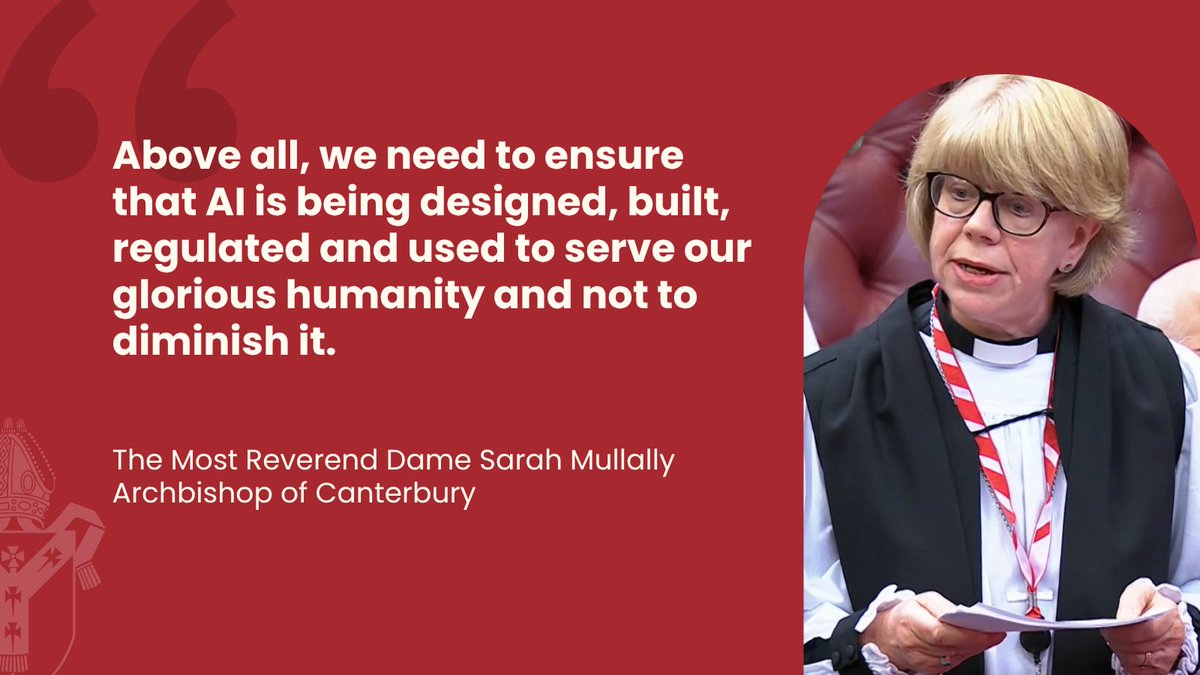
We must use AI to give us genuine life chances.
Here is the edited version:
I recently took part in aa debate initiated by the Archbishop of Canterbury that "this House takes note of the impact of Artificial Intelligence on human relationships and society". A very wide ranging debagte on how we can ensure that AI works for humanity. This is an edited version what I said;
I warmly thank the most reverend Primate for initiating this debate and for her very comprehensive, thought-provoking and empathetic introduction.
This really has been a stimulating and thoughtful debate. I very much welcome the Church's continuing involvement in AI policy. The right reverend Prelate the Bishop of Oxford was a member of the original House of Lords AI Select Committee, which I had the honour of chairing. It was he who proposed the ethical framework of five principles that the committee adopted in its 2018 report. Those principles — that AI should serve the common good, operate with intelligibility and fairness, respect data rights and privacy, be accompanied by universal AI education and never be given the autonomous power to hurt, destroy or deceive human beings — have since found their way, in substance, into the G20 AI principles, the OECD AI principles and a succession of international declarations. The Bishop planted those seeds in 2018.
As a liberal humanist, I come to these questions from a different angle from the Archbishop and the Bishop of Oxford But this debate has demonstrated a convergence of values that goes well beyond any single set of beliefs. Pope Leo's Magnifica Humanitas encyclical, mentioned by so many noble Lords today, deserves attention well beyond the 1.3 billion Catholics it formally addresses. . What is most compelling is the encyclical's insistence that no person can be reduced to productivity, cognitive performance or mere data, and that every human being bears a freedom and value no machine can replace or block. I would express that in the language of liberal rights rather than theology, but the substance is identical.
A number of noble Lords described the benefits of AI. We have also talked about some of the risks, in particular hidden risks such as the threat to resilience and the deskilling of curiosity Those risks have been extremely cogently articulated today.
This means that the questions the Archbishop asked in this context are entirely apposite. Just because we can, should we be developing these AI models? What direction do we want to go in, while we still have the choice? The very important question of alignment was also raised — what kind of AI are we content to see being developed? Technology is not neutral; we have choices.
Ofcom data published last month shows that just over half of UK adults now use generative AI, rising to 79% for 16 to 24 year-olds. Of those users, 12% report using AI as a friend or as someone to talk to — the simulation of intimacy . In the United States, therapy and companionship is already the number one use of generative AI, and that is where we are heading.
I readily acknowledge that AI companions can offer a safe space for neurodivergent users to rehearse social interactions. Well-designed AI can encourage care and consideration. The question is whether it is governed in the interests of those who use it, especially the young and vulnerable. Children's exposure to these AI chatbots demands the strongest safeguards. As several noble Lords said, they should not face it alone, and we should not be outsourcing childhood.
The encyclical speaks of algorithms blocking access to healthcare, employment and security on the basis of data tainted by prejudice, and of the silence of those who have no voice when such decisions are made. This is exactly the power issue raised by several noble Lords. The encyclical argues explicitly that algorithmic processes must "not be imposed from above in an opaque and unilateral manner", and that communities need transparency, accountability and meaningful avenues for recourse. That is precisely what the Horizon scandal, and similar cases elsewhere, taught us at devastating human cost. It is precisely why mandatory algorithmic impact assessments and clear accountability and transparency principles are moral necessities, not just some sort of regulatory red tape.
As several noble Lords mentioned, AI models scraping creative content without consent — producing deepfakes and synthetic information — are creating a huge threat to our creative industries, which has 2 million workers and is worth £145 billion per annum to the UK economy. They are also corroding public trust and causing creative and democratic harm.
The Office for Budget Responsibility estimates that AI could materially impact 40% of the UK labour force over the next 10 years, with administrative, secretarial, sales and customer service roles most exposed. This potentially creates societies susceptible to political as well as economic dislocation, affecting the very fabric of society. These issues must urgently be addressed.
Sir Tony Blair is right that AI represents an epochal change. Where we part company is whether the right response is acceptance or governance. The decisions made in the coming years will shape AI's trajectory for decades, and those decisions require democratic oversight, not deference to whoever controls the infrastructure. There is also the environmental dimension.
Sir Alan Milburn's interim report, published last week, tells us that young people now make up close to one in nine workers, with 1.25 million at risk of becoming NEET within five years, at a cost of £125 billion a year to the economy. Six in 10 of those young people have never had a job. Sir Alan describes their experience of recruitment as "applications disappearing into a void, interviews followed by silence, and recruitment processes that felt designed to deter rather than select." This is the algorithmic hiring gatekeeper for jobseekers. We need to reckon with an AI-transformed labour market. Fifty years ago, Ralf Dahrendorf, whose philosophy underpins my values, argued that real freedom is not just freedom from interference; it is freedom to build a life and to have genuine life chances. Sir Alan's lost generation risks having neither.
A National Education Union survey published in April found that two-thirds of secondary teachers believed that pupils' critical thinking had declined due to AI usage — yet these are the crucial skills for the future. Judgment is the antithesis of cognitive offloading. Most strikingly, half of all schools have no policy on AI use by staff or students. This is not a technology problem; it is a governance failure.
We have heard about the work on human flourishing in education. The OECD's Education for Human Flourishing framework argues that in the age of AI, education must strengthen human agency, human meaning and human security. It prioritises distinctive human intelligence as the capacity to know and understand others and to understand oneself as a learner. We can look to other models — Finland being one answer — to prepare our children for an uncertain world, but we have not yet done so.
Many questions have been asked today on online safety, AI safety, ethical balance and the potential governance of superintelligent systems. I simply ask the Minister: when the values of liberal humanism, the Church of England and the Catholic Church, the public, AI experts, the international institutions and the Government's own manifesto all point in the same direction, what are the Government waiting for? Why are we not putting in the kind of regulatory framework that so many noble Lords have asked for today?
Decisions in the coming year will shape AI's trajectory for generations. Regulation and innovation are not in opposition. Whether this technology becomes our servant or master will be determined not by the technology itself, but by whether those of us in positions of responsibility had the courage to act in time. We must not be rabbits in the headlights. As the Arhbishop said, we must put people ahead of profit and technology. I look forward to the Minister's response.

From Skills to Impact – Assessing, Showcasing and Shaping a Future-Ready Graduate Profile
I have recently become an Honorary Professor of Practice at School of Society and Environment at Queen Mary University of London, where until recently was the Chair of the governing council. This was a lecture due to be given to accademic staff but which sadly had to be postponed. This is what I would have said.
When I chaired the House of Lords Select Committee on AI in 2017-18, we concluded that the UK had a unique opportunity to shape AI for public benefit. More recently, I co-chaired Policy Connect's inquiry into "Skills in the Age of AI," which concluded last summer after nine months of evidence from business, academia, and citizens themselves. What emerged reinforces both the urgency and complexity of what we're discussing today.
And we now have an important new data point on the scale of that urgency. The third HEPI Student Generative AI Survey, published this year, found that 95% of students report using AI in at least one way, and 94% say they use generative AI specifically to help with assessed work. This is no longer a technology on the horizon. It is already operating at the heart of the student experience, in this institution and every other. Any response that treats this as something still to be planned for has already been overtaken by events.
The Government's New Framework: Promise and Limitations
The Skills England report published last October represents genuine progress. It identifies critical shortages: 26% of AI companies cite lack of technical skills as barriers, there's a gap for data architect roles, and 7.3 million employed adults lack essential digital skills — projected to become the UK's largest deficit by 2030.
Importantly, Skills England emphasizes the need for "interdisciplinary professionals" who combine technical knowledge with management, leadership, and communication — "blended skills." They've identified that demand exists for leadership capable of governing emerging technologies and managing change at pace.
But the report operates within the paradigm of skills acquisition — teaching people to use AI tools more effectively within existing frameworks. What it doesn't address is the structural transformation AI is driving — how educational institutions must respond not just with new content, but with entirely new pedagogical models.
Skills England recognizes we need "blended" professionals with system-level capabilities, but doesn't grapple with how we develop those capabilities when AI's very ease threatens to erode the critical thinking that underpins them.
The Employer Perspective: What's Actually Valued
Recent research from Kingston University provides stark evidence of the gap between what employers need and what graduates provide. Their latest Future Skills report, published in June 2025 in partnership with Nanyang Technological University, reveals that 56% of businesses are now likely to consider skills-based recruitment as the optimal way to modify their hiring practices — a fundamental shift from credential-based to capability-based hiring.
Kingston identified nine core future skills employers value: creative problem-solving, digital competency, being enterprising, a questioning mindset, adaptability, empathy, collaboration, resilience, and self-awareness. Significantly, their 2025 survey shows that every single one of these skills increased in perceived importance since 2023, with digital skills showing the highest growth at 8%. Notice what dominates that list. Digital competency is one of nine. The rest are adaptive capabilities: thinking critically, questioning assumptions, solving problems creatively, adapting as contexts shift.
The World Economic Forum's 2025 Future of Jobs Report identifies analytical thinking, creative thinking, resilience, flexibility and agility as top skills. LinkedIn Global Talent Trends places adaptability in the top five most in-demand skills globally. The convergence is clear: employers desperately seek meta-capabilities, not just tool proficiency.
Yet there's a concerning disconnect. Kingston's research reveals that only 23% of UK businesses anticipate AI will fundamentally change their business model in the next five years — though this represents a 10% increase since 2023. Compare this to East Asian nations where AI and digital skills are uniformly treated as top strategic priorities. This suggests the UK risks lagging behind international competitors in recognizing AI's transformative potential.
The Friction Paradox: Why Ease Threatens Capability
Recent research raises a profound challenge: the emerging evidence that AI's ease may be undermining the critical thinking we're trying to develop.
A 2025 study found significant negative correlation between frequent AI use and critical-thinking performance, especially among younger users. The mechanism is "cognitive offloading" — when AI provides effortless answers, users stop doing the evaluative reasoning that builds judgment.
This connects to Daniel Kahneman's framework of thinking fast and slow. AI encourages System 1 thinking — fast, intuitive, effortless responses that bypass critical analysis. AI's fluency triggers System 1 acceptance: it sounds authoritative, it's grammatically perfect — so we accept it. But genuine learning requires System 2 thinking — slow, deliberate, analytical engagement that questions assumptions.
The very characteristics that make AI appealing — speed, ease, confident fluency — prevent the effortful System 2 thinking that develops critical capabilities. Productive friction isn't pedagogical stubbornness; it's necessary intervention to force System 2 engagement.
An MIT Media Lab experiment found students who relied on ChatGPT performed worse, remembered less, and were less cognitively engaged than peers who wrote without AI. Inside Higher Ed recently declared that "learning requires friction," identifying productive friction as a guiding principle for AI integration. The distinction matters: friction that merely slows learning is counterproductive, but friction that forces cognitive engagement develops the capabilities employers value.
Compelling corroboration of this argument has recently emerged from research conducted partly here at Queen Mary. Researchers from this institution, alongside colleagues from Erasmus University Rotterdam, the University of Campinas, and McMaster University, studied how medical students learn and make diagnostic decisions when working with AI tools in clinical-style scenarios. They compared four approaches: clinical cases alone; with human feedback; with AI support but no feedback; and with AI support combined with human and AI feedback.
The results speak directly to the friction paradox. Students who combined AI support with human feedback performed best. But those using AI alone not only scored the lowest — they were also the most confident, despite being the least skilled. One of the researchers described this as giving learners a powerful sports car before they have learned how to drive. Without the experience to ask the right questions, students leaned too heavily on the tool and missed key diagnostic nuances — including the critical fact that many AI systems are trained predominantly on populations from the Global North.
The lesson is unambiguous: AI is transformative only when used at the right time, with the right training, and under strong governance. And it has implications well beyond the medical faculty. When the HEPI survey finds that 47% of students say they use AI tools to improve the quality of their work, we should ask what "quality" they are actually measuring — and whether, like those medical students, some are becoming more confident precisely as their independent skills atrophy.
Beyond Skills to Readiness
Our Policy Connect inquiry revealed a troubling gap. Despite massive investment — millions enrolled in AI courses, organisations making training mandatory — only 21% of workers feel "very confident" integrating AI into workflows, and 77% feel lost about how AI connects to career progression.
McKinsey found that while 89% of organizations use AI, only 9% have achieved "AI maturity." BCG identified the "silicon ceiling" — only 50% of frontline employees regularly use AI tools despite massive investment. Investment in training isn't translating into meaningful capability development.
The HEPI survey makes the institutional dimension of this gap concrete. While 68% of students believe generative AI skills are essential to thrive in today's world, fewer than half — just 48% — feel their teaching staff are helping them develop those skills for their future careers. That twenty percentage point gap between what students recognise they need and what they feel they are receiving is a direct measure of the delivery shortfall our institutions must address. Critically, the survey found this gap is widest among Arts and Humanities students — the very cohort most exposed to AI's disruptive effects on creative industries and least likely to feel their lecturers are equipping them for what is coming.
Three Emerging Patterns
Research from the Centre for Finance, Technology and Entrepreneurship identifies three patterns defining graduates' trajectories:
Mass Displacement — the gradual erosion of relevance. Entry-level positions providing domain expertise are disappearing. A 2025 Harvard study found sharp declines in junior-level hiring while senior hiring remained flat. The National Foundation for Educational Research projects that up to three million UK jobs in declining occupations could disappear by 2035 due to AI and automation, with administrative, secretarial, customer service and machine operation roles most at risk. The traditional entry-level pathway is contracting as AI automates routine tasks — this isn't speculative, it's measurable displacement.
And here's the additional challenge: remaining positions are increasingly filtered by AI recruitment systems. CV screening, initial assessments, video interview analysis — automated systems make the first cut. Graduates need to understand not just how to work with AI, but how to navigate AI systems judging their employability. The irony is stark: we're preparing students for careers where AI will decide if they're qualified to work with AI.
Supercharged Professionals — individuals achieving ten to hundred times previous output. Startups reaching scale with forty people rather than four hundred. These aren't people who've merely learned tools — they've fundamentally restructured how they work and create value.
Creative Disruptors — those building entirely new systems. This distribution isn't predetermined. Mass displacement becomes default only when no deliberate action is taken. Universities are where that action must begin.
The Performance Hexagon Framework
What CFTE call "the Performance Hexagon" maps contribution levels: Task Robots who execute when given clear instructions; Problem Solvers who work independently; System Thinkers who design structures solving categories of problems; and Superstars who identify opportunities without direction.
Overlay AI and a pattern emerges. At lower levels — task execution — AI replaces human work. At higher levels, AI amplifies. Problem Solvers find solutions faster. System Thinkers automate structures. Superstars move from ideas to scalable systems at unprecedented speed.
The critical question: are you preparing graduates who can move vertically through this hexagon? The Skills England framework helps with the horizontal. It doesn't address the vertical movement — developing questioning mindset, creative problem-solving, adaptability — that determines whether graduates become supercharged or face displacement.
What Future-Proofing Demands
The fundamental divide: who does the thinking?
Future-ready graduates will need three attributes:
Domain expertise — deep understanding of how value is created. AI executes but cannot replace years of tacit knowledge about how industries function.
Technology fluency — structuring workflows around AI, assessing output quality, integrating systems intelligently.
Adaptive capabilities — structured thinking, independent problem-solving, operating in ambiguity. These meta-capabilities — what Kingston identifies as questioning mindset, creative problem-solving, resilience — allow meaningful contribution as landscapes shift. These are precisely the capacities that risk atrophy without designed friction.
Deloitte found 66% of managers believe recent hires are unprepared — they identify the "experience gap" as larger than the skills gap. What's missing isn't technical knowledge; it's judgment, contextual understanding, autonomous operation in ambiguous situations. Employers increasingly hire "new collar" workers with non-traditional backgrounds but strong adaptive capabilities.
The World Economic Forum projects 44% of workers' core skills will change within five years. Technical skills alone provide insufficient protection.
The Transformation Required
Our inquiry recommended making AI literacy mandatory in the National Curriculum and establishing an AI in Education Advisory Board. For universities, the implications are profound.
First, AI literacy must be embedded across all disciplines. A law graduate needs to understand algorithmic decision-making as thoroughly as a computer science graduate needs data protection. This means designing assessments where students critique AI outputs, identify limitations, and reconcile AI analysis with primary sources.
As Nick Potkalitsky points out, students need to understand why different engagement modes exist: one-shot prompting for speed, chain-of-thought for accuracy, retrieval-augmented generation for grounding in documents. The pedagogical goal isn't teaching which button to press — it's shifting from "Does this sound right?" to "How would I check this?" That shift from passive acceptance to active verification is the questioning mindset Kingston identifies and employers need.
This requires embedded practice time, discipline-specific translation, and structures supporting ongoing faculty learning — not, as Potkalitsky notes, "another 2-hour professional development session."
Second, we must teach judgment. The Post Office Horizon scandal demonstrates the catastrophic cost when professionals cannot challenge automated systems. Graduates need to understand not just using AI in diagnosis but ensuring accountability. Not just deploying recruitment algorithms but auditing for bias. Not just using language models but understanding copyright implications.
Third, assessment must evolve. The HEPI survey found that 65% of students say assessment has already changed significantly in response to AI — up from 56% last year and just 32% the year before. That trajectory tells us the transformation of assessment is already well underway, driven partly by students and partly by institutional response. The question is whether institutions are shaping that change deliberately or simply reacting to it. Can our graduates conduct algorithmic impact assessments? Understand explainable AI? Maintain critical thinking when AI offers seductively fluent answers? The shift toward skills-based hiring is underway — Kingston's 2025 research shows 56% of employers are now likely to adopt capability-based recruitment, while 65% believe AI will influence how they hire. Our assessments must catch up with that reality.
Scale-to-Density Shift
Before 2022, top startups needed ten years and 500 people to reach significant scale. Today, AI-native startups reach the same milestones in two years with 50 people. A hundredfold efficiency gain.
This reveals a shift from scale to talent density — the proportion capable of structural thinking and leading transformation. A small cohort of truly future-ready graduates may contribute more than large numbers trained only in tool usage. This has uncomfortable implications for university business models built around volume.
Enabling Structural Change
Skills England identifies that employers want "bolt-on" training — short, modular options allowing existing workforce to supplement learning without multi-year apprenticeships. This signals current structures are too rigid.
There are proposals for lifelong skills grants providing dedicated funding for continuous education. Some advocate replacing the rigid apprenticeship levy with a flexible skills and training levy funding exactly the short courses Skills England identifies employers demanding.
Our inquiry recommended relaunching Local Digital Skills Partnerships. These partnerships, with modest £75,000 per region investment, upskilled 12,000 workers and reduced digital exclusion by 18%. The model worked through genuine collaboration.
Building Trust Through Transparency
Throughout my work on AI regulation, including my Public Authority Algorithmic and Automated Decision-Making Systems Bill, I've emphasized that public trust is fundamental. Our inquiry found only 33 UK public sector AI projects have published transparency records.
The conventional wisdom that regulation stifles innovation needs turning on its head. Appropriate regulation isn't just restricting harmful practices — it's key to driving adoption. Many AI adopters hesitate due to uncertainties about liability and ethical boundaries. Clear regulatory frameworks can accelerate adoption by providing clarity and confidence.
Our graduates will make decisions about algorithmic systems affecting millions. If they haven't been taught to prioritize explainability, fairness, accountability, they'll erode trust. Well-designed regulation catalyzes innovation, just as environmental regulations spurred cleaner technologies.
Digital Exclusion
Our inquiry found 19 million people in the UK face digital poverty. Skills England adds that 7.3 million employed adults lack essential workplace digital skills, projected to become the UK's largest deficit by 2030.
But the HEPI survey adds a dimension that should concern universities specifically. Students from higher socioeconomic households are measurably more likely to be using AI tools — including coding assistants and data analysis platforms — than those from lower socioeconomic backgrounds. The gap persists even where free versions of tools are available, which means cost alone does not explain it. Universities cannot assume that providing access to AI tools is sufficient to level the playing field. Structured support, embedded training, and deliberate attention to which students are actually developing AI fluency rather than merely nominal access to AI tools will be required. The skills divide is becoming a new dimension of educational inequality, and it is forming now, in our institutions, among our current students.
What This Means
For academic leaders: Move beyond incremental adjustments. Invest in faculty development — not just using AI tools, but designing experiences maintaining productive friction. Create assessment frameworks capturing adaptive capabilities. Build genuine partnerships. Engage with policy discussions about lifelong learning funding and flexible skills levies.
For business representatives: Share concrete insights about what you value — Kingston's nine core skills provide a framework. Provide meaningful project opportunities. Work with us to develop sector-specific AI Skills Accelerators aligned with the Industrial Strategy.
For both: Recognize that Skills England, while useful, provides tools for navigation within the existing model. We need transformation of the model itself — preparing graduates to design the structures that come next, with critical thinking capacities that only come from wrestling with difficult problems.
Conclusion
Skills England estimates AI adoption could boost the UK economy by £400 billion by 2030. But that assumes we get skills development right.
Kingston University's research shows we're moving in the right direction but also reveals we may be underestimating the challenge, with only 23% anticipating fundamental business model change from AI when international competitors are treating this as a top strategic priority.
Queen Mary has always combined academic excellence with social purpose. And as the research emerging from this institution — including on how AI overconfidence undermines clinical diagnostic skill — now demonstrates, we are also building the evidence base that should inform how every university approaches these questions. The UK can lead in AI — not through fastest adoption or lightest regulation, but through the most thoughtful, ethical, human-centred approach. That leadership must begin in universities.
The transformation is underway. The patterns — mass displacement, supercharged professionals, creative disruptors — are forming now. With intellectual clarity, institutional courage, and genuine collaboration, we can ensure graduates don't just survive this transformation — they lead it.
But we must be honest about the depth of change required. Adding AI modules won't suffice. Providing unfettered AI access without pedagogical friction won't suffice. Even the Skills England framework won't suffice.
We need to fundamentally rethink professional capability development in an age where AI's ease paradoxically threatens the cognitive capacities — that questioning mindset, that creative problem-solving — we're trying to develop.
That's the challenge before us. And it's one we cannot afford to meet with unambitious thinking.
Thank you, and I look forward to our discussion.
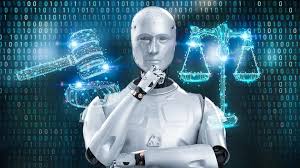
The Use of AI in Society and the Ethics surrounding this Technology
I recently took up the role of Honorary Professor of Practice at Queen Mary University of London after having served as Chair of its Governning Council for 8 years. A great privilege. This is the lecture I recently gave to Students in the first year of the new Applied AI Bsc Programme
When we started the House of Lords Select Committee special enquiry on Artificial Intelligence back in 2017, I had no idea we were standing at the threshold of one of the most extensive technological transformations in human history. We knew AI mattered. We understood it had economic potential. But I don't think any of us truly grasped just how rapidly this technology would reshape every aspect of our lives - from the mundane decisions about what we watch on streaming services to the profound questions about who gets a mortgage, who receives medical treatment, what jobs are available and increasingly, who lives or dies in conflict zones.
Eight years later, as I look back at our report "AI in the UK: Ready, Willing and Able?" and forward to where we are now, the question is no longer whether we need to regulate AI. The question is whether we can regulate it effectively before the costs of inaction become unsustainable.
When our Select Committee published its findings in April 2018, we proposed five fundamental principles:
- Artificial intelligence should be developed for the common good and benefit of humanity.
- Artificial intelligence should operate on principles of intelligibility and fairness.
- Artificial intelligence should not be used to diminish the data rights or privacy of individuals, families or communities.
- All citizens should have the right to be educated to enable them to flourish mentally, emotionally and economically alongside artificial intelligence.
- The autonomous power to hurt, destroy or deceive human beings should never be vested in artificial intelligence.
These principles were not revolutionary. They drew heavily on the OECD's work and on liberal democratic values. What was revolutionary was the context: we were trying to articulate was a comprehensive ethical framework for a technology that didn't yet fully exist.
As I wrote in my book "Living with the Algorithm: Servant or Master?", the central question we must answer is deceptively simple: how do we ensure that AI remains our servant and does not become our master?
But principles without enforcement mechanisms are merely aspirations. And aspirations, however noble, do not prevent algorithmic discrimination. They do not stop the deployment of facial recognition systems that misidentify people of colour at alarming rates. They do not protect workers from unfair automated hiring decisions. And they certainly do not prevent the kinds of catastrophic failures we saw with the UK Post Office Horizon scandal - a tragedy that should serve as a warning to us all about what happens when we allow complex automated systems to operate without transparency, accountability, or effective challenge mechanisms.
Too often in the UK, we legislate when the damage has already been done. When it comes to protecting citizens and their interactions with new technologies, we need to be proactive, not reactive. We cannot risk another Horizon scandal.
This is why I introduced the Public Authority Algorithmic and Automated Decision-Making Systems Bill. If "computer says no" to a benefit decision, an immigration decision, or any other significant automated determination, citizens must have the right to understand why that happened and to challenge it effectively. We need automatic logging capabilities, transparent procurement standards, and independent dispute resolution mechanisms. These are not burdens on innovation, they are the prerequisites for public trust.
AI, as we all know however, respects no borders, so the international dimension is crucial.
In the past two years, we've witnessed an extraordinary flowering of regulatory approaches worldwide:
The EU AI Act represents the most comprehensive attempt yet to regulate AI through binding legislation. Its risk-based approach, with prohibited practices at one end and minimal-risk systems at the other, provides a clear framework. But it also demonstrates the challenges of regulating a rapidly evolving technology - by the time the Act was finalised, the AI landscape had already shifted dramatically with the emergence of generative AI systems like ChatGPT at the end of 2022.
The Council of Europe Framework Convention on AI, which opened for signature in September 2024, takes a different approach. As a framework treaty, it establishes broad commitments while leaving implementation details to national legislation. I was pleased to contribute to this process, and I believe the Convention represents an important step toward international convergence on AI governance.
The Convention's strength lies in its inclusivity - bringing together not just the 46 Council of Europe member states but also includes countries like the United States, Canada, Japan, and others who are COE observer members.
Other jurisdictions are also moving forward. China has implemented specific regulations on algorithmic recommendation and generative AI. The United States is pursuing a deregulatory, hands-off federal approach to AI, but with an increasingly contentious federal-state battle playing out — with various states like Colorado and California passing their own AI legislation, and the Trump administration actively using litigation to push back against them.
South Korea has already enacted comprehensive AI legislation, and countries like Canada and Australia are moving fast to develop their own frameworks — the global momentum towards regulation is unmistakeable.
But here's the crucial question: are we moving toward convergence or fragmentation? And does it matter?
I would argue that it matters enormously. The tech companies developing these systems are global actors. Data flows across borders. AI systems trained in one jurisdiction are deployed in others. If we end up with radically different regulatory standards, we risk creating compliance nightmares that genuinely could stifle innovation, while simultaneously failing to protect citizens because regulatory arbitrage allows companies to exploit gaps between jurisdictions.
This brings me to what I call the innovation paradox - and here I want to challenge conventional wisdom.
We are constantly told that regulation stifles innovation. The tech industry has been remarkably successful in propagating this narrative. But I want to turn that conventional wisdom on its head.
Responsible regulation does not stifle innovation - it channels it, focuses it, and ultimately sustains it by building and maintaining public trust. Without trust in the technology being developed, there is no sustainable innovation.
Consider the pharmaceutical industry. We don't allow drug companies to release new medicines without rigorous testing and approval processes. These regulations don't prevent pharmaceutical innovation - they ensure that innovation is safe and effective. Why should AI be any different when it can have equally profound impacts on human health, liberty, and wellbeing?
Or consider the financial services sector. After the 2008 financial crisis, we strengthened regulations around banking and financial products. Has this killed innovation in fintech? Quite the opposite. The UK has one of the world's most vibrant fintech sectors precisely because clear, well-designed regulation creates certainty and builds confidence.
The problem is not regulation per se - it's poorly designed regulation that is either too prescriptive, trying to specify technical solutions that quickly become obsolete, or too vague, providing no real guidance to either developers or users.
What we need is agile, principles-based regulation that sets clear objectives - transparency, accountability, fairness, human rights protection - while allowing flexibility in how those objectives are achieved. This is the approach we advocated in our original Select Committee report, and I remain convinced it's the right one.
From Theory to Practice: Implementation Challenges
So how do we move from principles to practice? How do we implement these frameworks effectively?
Let me identify four critical challenges and some potential solutions:
1. The Technical Challenge: Making AI Explainable and Auditable
One of the fundamental problems with AI systems, particularly deep learning models, is their opacity. Even the developers often cannot fully explain why a system made a particular decision. This is a serious problem when those decisions affect people's lives.
We need to mandate that AI systems deployed in high-stakes contexts - criminal justice, healthcare, employment, access to public services - must be auditable and, to the extent technically possible, explainable. This means requiring comprehensive documentation, logging of decisions, and the ability to conduct meaningful algorithmic audits.
The EU AI Act's requirements for technical documentation and transparency are a good start, but we need to go further in developing standardised audit methodologies and potentially creating independent AI audit institutions. Perhaps through the evolution of the AI Security and Safety Institutes already established.
2. The Skills Challenge: Building AI Literacy Across Society
As I noted in "Living with the Algorithm", we face a serious digital skills gap. If citizens don't understand even the basics of how AI systems work, how can they exercise their rights effectively? How can they challenge unfair decisions? How can they participate meaningfully in democratic debates about AI governance?
We need a massive investment in digital literacy at all levels - from primary education through to lifelong learning. But this isn't just about teaching people to code. It's about creating critical consumers of technology who can ask the right questions and demand accountability.
Policymakers and regulators also need to upskill dramatically. If we are to decide on regulation we need to understand the technology. That’s why, 10 years ago, I co-founded the All-Party Parliamentary AI Group. It’s still a work in progress!
3. The Enforcement Challenge: Who Guards the Guardians?
Principles and laws are meaningless without effective enforcement. But who enforces AI regulations, and how?
The UK’s approach of distributing responsibility across existing sector regulators — the ICO, Ofcom, the CMA, the FCA — without giving them new powers or adequate resources is, frankly, inadequate. It creates gaps, inconsistencies, and confusion.
We need either a dedicated AI regulator or a much more coherent, properly resourced framework for coordination among existing regulators. The recent establishment of various advisory bodies — the AI Security Institute, the Central AI Risk Function, the DRCF’s AI and Digital Hub, the Centre for Data Ethics and Innovation, and the Regulatory Innovation Office — is welcome, and each has a role to play. But advisory and coordinative powers are not enough. None of them has genuine enforcement teeth. Ahead of AGI or superintelligence, we need binding legislation, not just advisory frameworks.
We also need meaningful penalties for non-compliance. The EU's approach of fines up to 6% of global turnover for the most serious violations provides real deterrence. Regulatory enforcement must have teeth. We should - and this may be more controversial - think about developer codes of conduct too, a kind of Hippocratic oath for digital engineers.
4. The Democratic Challenge: Keeping Pace with Technological Change
Perhaps the most fundamental challenge is the mismatch between the pace of technological change and the pace of democratic governance.
AI capabilities are advancing exponentially. Parliamentary processes move more slowly. By the time we've debated and passed legislation, the technology has moved on. How do we solve this problem?
I don't have a perfect answer, but I believe part of the solution, lies in creating more agile regulatory mechanisms - frameworks that can be updated through secondary legislation or regulatory guidance without requiring full parliamentary process every time.
We also need better mechanisms for ongoing dialogue between technologists, policymakers, civil society, and the public. The OECD's Global Parliamentary Network on AI, which I helped found, is one example of how we can facilitate these conversations across borders.
Let me highlight three areas where I believe urgent action is needed:
Governments cannot credibly regulate private sector AI use if they cannot ensure responsible AI use in the public sector. Yet we've seen repeated failures - from algorithmic bias in benefits systems to questionable uses of facial recognition technology.
My Public Authority Algorithmic and Automated Decision-Making Systems Bill Private Members’ Bill addressed this directly. We need mandatory impact assessments, bias testing, transparency requirements, and robust appeal mechanisms for all significant public sector AI deployments. Government should be leading by example, not lagging behind.
Then - as I've argued consistently - we need a duty of transparency regarding the use of copyrighted material in training AI systems.
The tech companies' position that they should be able to scrape and use any content available online without permission or compensation is untenable. It would destroy the creative industries and undermine the very concept of intellectual property. We need clear legal frameworks that balance innovation with creators' rights, and that means mandatory transparency about training data, licensing requirements, and fair compensation mechanisms.
Finally, we must address what may be the most profound ethical question: autonomous weapons systems capable of making kill decisions without meaningful human control.
I initiated and served on the Special Inquiry Select Committee into AI in Weapons Systems, and our report "Proceed with Caution" was clear: we must establish and enforce international prohibitions on fully autonomous weapons. The autonomous power to hurt, destroy, or deceive human beings should never be vested in artificial intelligence.
This isn't just about the distant future. These systems are being developed and deployed now as we speak in the US-Iran war and in Ukraine. We need urgent international action to prevent an AI arms race that could make the nuclear arms race look tame by comparison.
So where do we go from here?
First, we need international convergence on core principles. The Council of Europe Framework Convention provides a foundation. We should build on it, working toward greater harmonisation of standards while respecting different legal traditions and governance models.
Second, we need to create interoperable regulatory frameworks. This doesn't mean identical regulations everywhere, but it does mean ensuring that compliance with one jurisdiction's requirements substantially satisfies others. Technical standards bodies like the ISO and The National Institute for Standards and Technology in the US have a crucial role to play here.
Third, we need to invest in enforcement capacity. Regulatory bodies need resources, expertise, and powers adequate to the challenge. This includes funding for AI audits, algorithmic impact assessments, and compliance monitoring.
Fourth, we need to mandate transparency and explainability. High-risk AI systems should be required to provide clear documentation, enable meaningful audits, and offer explanations for their decisions that are comprehensible to affected individuals.
Fifth, we need meaningful public participation. AI governance cannot be left to tech companies and government officials. We need robust mechanisms for civil society engagement, public consultation, and democratic oversight.
Sixth, we need to get serious about education and skills. Digital literacy must become as fundamental as reading, writing, and arithmetic. And we need specialised training programs to ensure that policymakers, regulators, judges, and other key decision-makers understand the technology they're governing.
Looking to the Horizon: The Challenges We Cannot Afford to Defer
Before I conclude, I want to turn from the governance frameworks we are building today to the relatively new threats that are already emerging on the horizon - because if we wait until they are fully upon us, we will have left it too late.
The first is the question of agentic AI. We are already moving beyond systems that respond to prompts into systems that act autonomously - planning, executing, and adapting across complex tasks with minimal human intervention. These agentic systems will operate in our financial markets, our healthcare systems, our critical national infrastructure. The question of meaningful human oversight - who is responsible when an autonomous AI agent causes harm, and how that accountability is enforced in real time - is not a theoretical problem. It’s an immediate regulatory gap. Our existing frameworks were designed for tools, not for actors. We urgently need to revisit them.
The second is the trajectory toward artificial general intelligence. I want to be direct about this, because there is a tendency in parliamentary debate to treat AGI as a distant science-fiction scenario rather than a live policy question. It is not. The leading AI developers themselves publish timelines measured in years, not decades. The implications - for employment, for democratic governance, for the balance of power between states and corporations, and for human autonomy itself - are of an order of magnitude that dwarfs anything we have previously legislated for. Advisory frameworks and voluntary commitments are wholly inadequate to this challenge. We need binding international architecture, we need it now, and we need it to have teeth. The Council of Europe Framework Convention is a beginning, but only a beginning. The lesson of the nuclear age is that we should have moved faster on governance than we did - and we cannot afford to repeat that mistake.
The third - and in some respects the most urgent - is autonomous weapons. I have already referred to the work of the Special Inquiry Select Committee and our report "Proceed with Caution". But I want to be blunt: the pace of international negotiation on lethal autonomous weapons systems is not keeping up with the pace of their development and deployment. We are watching states - including allies - integrate AI into targeting and kill-chain decisions in ways that progressively erode the principle of meaningful human control. Once that principle is surrendered in practice, it will be extraordinarily difficult to recover in law. The prohibition on vesting the autonomous power to hurt, destroy or deceive human beings in artificial intelligence is not a noble aspiration - it must be a binding legal obligation. I call on the Government to set out, clearly and urgently, what steps it is taking in multilateral forums to secure that prohibition before the technological facts on the ground make the argument moot.
These three challenges - agentic systems, the AGI threshold, and autonomous weapons - share a common feature: they each represent a point at which the pace of technological development could outrun our capacity to govern it, possibly irreversibly. The window for effective action is open. It will not remain so indefinitely.
I began this speech by asking whether AI will be our servant or our master. The answer will not be determined by the technology itself. It will be determined by whether we - parliamentarians, governments, international institutions, and civil society - have the courage and the foresight to act before the moment of decision has passed.
The decisions we make about governance frameworks in 2026 will shape the trajectory of AI development for generations to come.
I am often asked whether I'm optimistic or pessimistic about the future of AI. My answer is that I'm neither - I'm realistic.
Realism means that we must ensure we don’t sleepwalk into a future where opaque algorithms make life-changing decisions without accountability. We must not allow a handful of tech companies to accumulate unprecedented power without democratic oversight. I'm determined that we will not sacrifice fundamental rights on the altar of innovation. And I'm determined that we will not fail to grasp the extraordinary opportunities that responsible AI development offers.
But realism is not enough. We need action - coordinated, international, sustained action - to build the governance frameworks that will ensure AI serves humanity's best values rather than our basest impulses.
What we need now is the political will to translate those values into effective practice. It requires collaboration across borders, across disciplines, and across the traditional divides between government, industry, academia, and civil society.
You, the students in this room today, will live with the consequences of the choices we make. You will inherit the AI governance frameworks we build -or fail to build. I hope that when you look back in 2040 or 2050, you'll say that we in the 2020s got it right - that we built systems that protected what matters while enabling innovation that genuinely serves the common good.