

Lord C-J asks: Will this Government build on the achievements of the last?
This week in the debate on the Queen's Speech I urged the Government to build on the positive record of the coalition government in its support for the development of the UK's creative industries.
The UK’s creative industries have been one of the great success stories of the past five years. Significant policies benefiting these industries were developed during the coalition Government. I pay tribute to Vince Cable for all his work as the Business Secretary.
I want to see creative businesses continue to thrive across the whole country so that our economy can continue to reap the benefits. It is vital that we do not lose the momentum. Will this Government build on the achievements of the last? That is the question.
To maintain that momentum we need to encourage clustering of creative businesses developed through alliances between central government, local authorities, universities and the private sector in our major cities. Our cities and many counties need greater powers, especially over finance. I therefore welcome in principle the proposed cities and local government Bill as part of the Government’s northern powerhouse strategy.
Many noble Lords have talked about development of digital skills being vital. Expansion of digital platforms has highlighted the growing convergence of creative content and the tech sector. Skills in the arts and sciences are increasingly drawn together. Will the Government promote the value of creative subjects in schools and ensure that they are rewarded for offering a broad and balanced curriculum?
The number of apprenticeships created and taken up in the creative industries has expanded hugely in the past few years. I hope that they will enhance the co-ordination of action on skills by merging the two skills councils, Creative and Cultural Skills and Creative Skillset, into a single powerful and effective body. Will the Home Office break the habit of a lifetime and ensure with BIS that the tech and creative industries are able to fill the gaps in high-end skills, from abroad if necessary?
As we have heard today, our broadcasters are the linchpin of the creative industries and there are some key questions in that regard. Will the Government maintain Channel 4 in public ownership? Will they follow up the consultations started in March on Section 73 of the Copyright, Designs and Patents Act, which requires public service broadcasters to give away their most valuable product—their channels—to the pay-TV cable platform in the UK, and repeal it?
We had a mini debate on the BBC today and contributions on the BBC were made yesterday. Under John Whittingdale’s chairmanship, the Culture, Media and Sport Committee produced a valuable report on the future of the BBC with many useful observations and recommendations, including on governance and extension of the licence fee to iPlayer-only users, which can, and no doubt will, be taken forward into the charter discussions—and so too, I hope, will the committee’s views on the need for open and transparent discussions on the charter. Will there be a full and open debate on any decriminalisation proposals and will the potential financial cost of such a policy to the BBC be fully recognised? We need strenuously to protect the independence of the BBC. Currently, the licence fee is the best way of doing that. However, that does not mean that it needs to rise faster than inflation.
Investment in the UK’s creative industries can only really make a difference if their intellectual property rights, particularly those relating to the protection of their online materials, are properly understood and enforced. It was good to see the acknowledgement in the Conservative manifesto of the importance of intellectual property and of proper behaviour by search engines. However, I was rather baffled by some of the statements in the manifesto. It says:
“We will protect intellectual property by continuing to require internet service providers to block sites that carry large amounts of illegal content”.
I do not recall that we were able to persuade the last Government to bring in any legislation to do that. The legislation remained unenforced on the books, so I think there are questions to be asked about that. Is it not crucial that we should educate consumers on the importance of intellectual property and support initiatives designed to get voluntary agreement from the advertisers and credit card companies not to advertise on infringing sites?
Will the Government continue to support the long-term funding of the Police Intellectual Property Crime Unit, or PIPCU, which carries out such vital work? Will they increase sanctions relating to online offences in line with the recent government review of penalties for online copyright infringement, Penalty Fair?
I regret that we shall spend the next two years arguing about membership of the EU. I hope that, at the same time, the Minister will find time to work with our EU partners to ensure that proposals for copyright reform as part of the single digital market proposals do not damage our creative industries by limiting territorial licensing.
I very much hope that the Government will continue discussions with artists and creators on extending the law governing unfair contracts to include intellectual property contracts. I very much hope that, when possible under EU law, the application of public lending rights to remote e-lending will be extended.
II very much hope that the Government will continue to promote the value of live music despite the powers created in the Anti-social Behaviour, Crime and Policing Act, which are already being used disproportionately. I agree 100% with the noble Baroness, Lady Liddell, and with the comments made by my noble friend Lord Lee yesterday, on the importance of our tourism industry, which so far, even after five years of the last Government, has been treated as a Cinderella and holds such promise for job creation in the years up to 2020. Time will tell.
In her response Baroness Neville-Rolfe the IP Minister said:
"To make sure that the UK retains its position as the world’s best IP regime, we will also focus on a number of measures including: improving our rights-granting services; reforming the law to improve protection for businesses; striving to improve international patent systems; and educating businesses and consumers about IP. The consultation on Section 73 is continuing. The noble Lord, Lord Clement-Jones, is right to say that enforcement is incredibly important. It is great that we have managed to extend the life of PIPCU, and we are looking at future options for funding. He will also be very glad to know that we have used Section 97A to block access to websites alleged to host 10 million infringing e-books"


Busking: Let's Back Voluntary Action over Regulation!
Good to see that the work of the Mayor's Busking Taskforce has now come to fruition with the launch of Busk in London and the new voluntary code of conduct.
Many congratulations to Paul Broadhurst, Julia Jones, Jonny Walker, Nick Broad and many others.

Launch of China Cultural and Creative Industries Reports 2013
Last week I helped to launch a fascinating set of reports on China's creative industries edited by Professor Trish Walker and Professor Hardy Yong Xiang.
See the weblink here:
http://link.springer.com/book/10.1007%2F978-3-642-38157-7
I've done a foreword in which I discuss the opportunities for creative partnership between Britain and China. This publication will help enormously in developing those partnerships.
Here is what I said:
Creative employment in the UK provides around two million jobs, in the creative sector itself and in creative roles in other industries. In recent times employment in the sector has grown at double the rate of the economy as a whole.
Something very important for the creative industries is also happening in China.
In business the emphasis is now on creativity. This is very much reflected in the 12th five-year plan that is underway and marks an important new approach where creative and artistic skills are being highly valued.
At the same time I have seen a great interest in China in creating partnerships with British creative industries and creators, particularly in games and new media, publishing, architecture, design, fashion, animation, music, film, radio, television and advertising, especially after the spectacle of the Olympic and Paralympic ceremonies and the success of the British pavilion at the Shanghai Expo.
We now have great opportunity for creative and artistic partnership between China and the UK. There is a real role for collaboration between us in helping developing creative industries clusters in China.
These reports will be invaluable in helping British creative industries develop a strong understanding of where they can develop partnerships in China, and I very much welcome Prof. Patricia Ann Walker and colleagues’ initiative in putting such a comprehensive publication together.

Lord C-J argues for ticket abuse legislation
In the recent 2nd Reading Debate on the the Consumer Rights Bill I argued strongly for new legislation to prevent ripping off of consumer by secondary ticketing sites as suggested recently by the All Party Ticket Abuse Group.
see here
http://www.publications.parliament.uk/pa/ld201415/ldhansrd/text/140701-0001.htm#14070156000078
"There is then the whole question of ticketing abuse. Increasingly—as Channel 4’s “Dispatches” investigation and the BBC’s “Watchdog” have shown—professional secondary ticketing touts buy tickets solely with the intention of denying them to real fans, to whom they then resell their tickets at inflated prices.
With internet ticket selling becoming more streamlined, touts are able to use sophisticated computer systems to buy large volumes of tickets automatically, seconds after they go on sale. That often means that it is practically impossible for genuine fans to access the event. An artificial shortage of tickets and an inflated secondary market are created. Content providers gain no share whatever of the inflated prices charged.
As the All-Party Group on Ticket Abuse—of which I am a member—noted, that market does not adhere to the same principles of transparency and consumer protection as other markets. Members of the group believe, as I do, that the large-scale, unauthorised resale of event tickets is against the interests of both consumers and content creators. We believe that the solution is greater transparency in the secondary market and a greater ability for event holders to control who can resell their tickets. The Metropolitan Police report drawn up by Operation Podium after the Olympic Games stressed the need for an open and transparent system for ticket reselling, with clear and appropriate regulations. Secondary websites should be required to publish full details of the ticket being offered, including the original face value, seat number and location. They should identify the seller, state whether or not the seller has the permission of the originator to resell the ticket, and declare where the tickets are being listed by the event organisers."

Lord C-J on Startups: Financing getting better but major skills gaps
In many respects the Queen’s Speech is to be welcomed, precisely for the fact that it does not contain a huge amount of new legislation. None the less, I welcome the carryover of the Consumer Rights Bill and the Deregulation Bill. Curiously, I note for the aspiring statesmen among us that it will, among other things, make statues easier to erect. I do not know whether your Lordships noticed that.

Britain and China: A Creative Partnership : LSE Confucius Institute Lecture
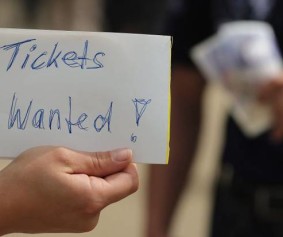
Government Agrees with Peers to Put Fans First
Earlier this year the Coalition Government agreed a compromise on the Consumer Rights Bill with proponents of transparency measures to prevent ticket fraud and by secondary ticket sellers.
As a signatory to the original amendment and a member of the All-Party Group on Ticket Abuse I paid tribute to Lord Moynihan, Sharon Hodgson MP, Mike Weatherley MP and Lady Heyhoe Flint for their roles in the campaign and their for their efforts in securing this agreement, which will benefit music and sports fans immensely.
Here is what I said:
http://www.publications.parliament.uk/pa/ld201415/ldhansrd/text/150224-0001.htm#15022465000505
We are now waiting for the new Conservative Government to set up the review of the law governing Secondary Ticketing as promised in the last Parliament and enshrined in the Consumer Rights Bill. I asked a question in the Lords about this recently and this is the reply I received
To ask Her Majesty’s Government when they intend to commence the review of the consumer protection measures for the secondary ticketing market under section 94 of the Consumer Rights Act 2015; and who will undertake it.
The Parliamentary Under-Secretary of State, Departments for Business, Innovation and Skills and for Culture, Media and Sport (Baroness Neville-Rolfe) (Con): My Lords, work on appointing the chair and expert group is well advanced and the review will proceed once this and the terms of reference are finalised. We are aware of our statutory obligation to publish a report on its findings by 26 May 2016.
Lord Clement-Jones (LD): My Lords, I thank the Minister for that reply but ticket fraud continues to soar this summer. Circle Tickets has defrauded hundreds of music fans just this June while the RFU reports zero compliance with the Act for World Cup tickets, so the problem remains acute. This review is enshrined in statute as a result of the efforts of the noble Lord, Lord Moynihan, and others only recently. We are now two months out from the general election. When will this review start, will BIS or the DCMS oversee it and what will its scope be?
Baroness Neville-Rolfe: My Lords, as I have said, we will publish details of the review shortly. I share the noble Lord’s disappointment on the enforcement side and, prompted by his Question, I spoke to the City of London Police only last week. I was reassured about some of the actions it is taking, both on its own and with the cultural and sporting bodies, for the important events of this summer. As the noble Lord
Here is the original piece I wrote after the vote in the Lords in November
The House of Lords has handed a big boost to music, sport and comedy fans as a cross-party coalition of Peers yesterday passed an amendment to curb the actions of ticket touts.
In a defeat for the Government, Peers forced through a new clause to the Consumer Rights Bill to increase transparency in the ticket resale market.
The new provisions, passed by 183 votes to 171, will mean that touts selling their tickets through major internet platforms like Seatwave and Viagogo will have to prominently disclose key facts to potential customers, including:
- Their identity, particularly where they are selling tickets as a business;
- The original face value of the tickets being sold;
- The individual characteristics of the tickets being sold, such as the seat number or the booking reference, and;
- Whether the terms and conditions on the ticket mean that it can be cancelled if the organisers find out it has been resold.
It is hoped that the information being made public will enable event holders to identify the largest ticket touts and prevent them from buying up large quantities of tickets to re-sell, leaving ordinary fans with no choice but to pay inflated amounts on the secondary market.
The latest high-profile tour to be affected is that of Fleetwood Mac, with thousands of tickets being resold on the secondary market at way above face value within minutes of the tour selling out. Similarly, next year’s Rugby World Cup has been plagued by touts reselling tickets to England games.
The amendment follows a similar attempt in the Commons earlier in the year. Both amendments were informed by a report from the All-Party Parliamentary Group on Ticket Abuse, which held an inquiry at the beginning of the year into the secondary ticketing market.
Liberal Democrat Peer and signatory to the New Clause, Lord Tim Clement-Jones, said: “This is a victory both for the ticket-buying public and for the hugely important live event industry. The Police and the entertainment industry have been clear that action needs to be taken on ticket touts to ensure that genuine fans can get access to gigs, shows and games without having to pay extortionate prices, and these new measures would do exactly that.”
Labour Co-Chair of the All-Party Parliamentary Group on Ticket Abuse, Sharon Hodgson MP, said: “Ticket touts have operated with impunity for far too long. In no other market would we put up with not knowing who we were buying from or whether they even had permission to sell us a product. This amendment is a significant step towards tackling the scourge of touts and putting fans first, and I hope that the Government now listens to the will of Parliament.”
Conservative Co-Chair of the All-Party Parliamentary Group on Ticket Abuse, Mike Weatherley MP, said: “It’s been clear for a long time that this market is not working in the interest of genuine fans or the people who put in all the hard work and investment to put on live events. Anyone operating honestly has nothing to fear from these changes, but they will make a big difference for ordinary fans. It’s imperative that the Government doesn’t try to reverse this amendment when the Bill comes back to the Commons.”
See the Report in the Evening Standard

Ming : 50 years that changed China
A fantastic exhibition at the British Museum! Well worth a visit!

As the BM say:
The exhibition explores the years 1400 – 1450, a pivotal 50 year period that transformed China during the rule of the Ming dynasty. In this period the capital is established in Beijing and the borders of China are fixed as they are today. Bureaucrats replace military leaders in the hierarchy of power, the emperor’s role changes from autocrat to icon, and the decision is taken to centralise, rather than devolve, power. The exhibition includes rare loans of some of the finest objects ever made in China, shedding light on this important part of world history that is little known in Europe. China’s internal transformation and connections with the rest of the world led to a flourishing of creativity from what was, at the time, the only global superpower."

Lord C-J helps to launch techUK manifesto for growth and jobs
I recently went to techUK where Julian David their Chair and Charlotte Holloway their Head of Policy launched their Manifesto for growth and jobs.
Ed Vaizey, Minister for Culture & Digital Industries, Iain Wright Shadow BIS Minister and I gave our responses to the recommendations and outlined our parties' visions for digital and tech policy post-2015.
Here is what I said:
I am delighted to be here at the launch today of techUk’s Manifesto.
It strongly reinforces and complements the Start up Manifesto from COADEC published this month and the Report "Connected Cities" from Jim O'Neil's City Growth Commission published in July. Singing from the same hymn sheet.
I can't comment at length. But I want to deal in turn with a few key aspects set out in the manifesto.
First , Access to Finance
I agree need to ensure that Tech companies at every stage have access to the Finance they need to grow and can stay in London.
We've successfully tackled access to early stage equity finance through the Government's Seed Enterprise Investment schemes it's one of the most generous early stage tax breaks available anywhere in the world.
Tech companies have also benefited from a range of Government investment and support schemes, including the Business Growth Fund, Enterprise Capital Funds (ECF)and the Enterprise Finance Guarantee (EFG),
It is the later stages of equity finance where we are behind Silicon Valley and Nasdaq in New York. Problem of business accessing finance to achieve scale. There is a danger of businesses moving to the US at this funding stage.
No solution yet although the LSE looking at this and there is evidence from recent listings on the Stock Exchange that the creation of the new High Growth Segment to encourage companies to list here is having an impact. Look forward to Sherry Coutu’s report mentioned in the Manifesto
As regards debt finance with very limited exceptions the banks are failing SME's and start ups but Crowd funding is beginning to have a real impact and it is good that fund such as Funding Circle are receiving government suppor through the Business Finance Partnership scheme (BFP).
Loans through Crowd funding have recently hit the £2bn mark.
The Lib Dems don't propose waving a magic wand but in our pre manifesto explicitly we want to facilitate new entrants to the banking sector, including through public procurement policy, so that there is much more choice and variety of competitors in banking, in particular business banking and encourage the growth of crowd funding and alternative finance models, .
We also echo the Manifesto in supporting innovation through greater public funding on a longer timescale, with a ring-fenced science budget, more ‘Catapult’ innovation and technology centres.
I am glad to see praise for Catapult centres . The Euston Connected Digital Economy catapult has worked diligently with Dominic Young and his team to develop the Copyright Hub. But they are a well kept secret and their work needs to be promoted.
Skills
The talent available however is far below what we need. Start ups need a mixture of technical and creative skills to develop their new digital services. The manifesto quotes my colleague Baroness Lane-Fox in saying we need 1 million tech jobs to be filled by 2020 to keep up with demand.
I welcome the mandatory inclusion in the curriculum of coding/computer science from this September for 5-16 year olds, the first in the G20 Also welcome the involvement of the tech sector in Code Clubs.
But even if the pipeline from schools was finding the right talent programmers fresh out of college are not necessarily up to the job. Training and proper apprenticeships are hugely important.
•Lib Dems are keen to increase the number of apprenticeships and improve their quality, extending the Apprenticeship Grant for Employers for the remainder of the next Parliament, delivering 200,000 grants to employers and expanding the number of degree equivalent Higher Apprenticeships.
• Develop National Colleges as national centres of expertise where there is demand and an identified need, to deliver the high level vocational skills that businesses need in these areas
That said we will still be reliant on the skills of overseas undergraduates and post graduates and we should welcome them.
As the Manifesto makes clear -reinforced by a recent report from universities Uk and an earlier report from Policy Exchange--we must change policies towards overseas students
I welcome the call for a smart migration policy. It's no secret that there is a difference of emphasis between the coalition parties on this. Can’t chase unrealistic targets in trying to reduce in net migration at the expense of growth in the digital economy.
• In our Pre manifesto we pledge to remove students from our immigration targets given their temporary status, while taking tough action against any educational institution which allows abuse of the student route into the UK.
In my view we need to go further and take the actions suggested by techUk (as does the Start up Manifesto) such as reinstatement of the post study work route visa. I have asked numerous questions on visa policy towards students for the past 4 1/2 years and we are walking towards disaster.
Clusters
The manifesto clearly recognizes the importance of geographic and sectoral balancing of our economy . Correct when the Manifesto says tech economy “more geographically extensive than is often recognized”
And this leads to the importance of clusters. Tech City yes-with 15,000 startups last year and the year before.
70,000 people now employed there. The Tech sector has accounted for 30%of new London jobs since 2009.
But there are so many other places,
- Newcastle Silicon Shore,
- Liverpool with the Baltic Triangle
- Brighton’s so called Silicon Beach
- Dotforge in Sheffield
Also Manchester, Edinburgh, Leeds, Bristol. Birmingham, and Bath.
The role of universities is crucial in all of this.
But how can we strengthen our clusters?
RSA's City Growth Commission chaired by Jim O’Neil takes the view that too many of the UK’s urban areas outside London are failing to achieve their growth potential.
It is of course important that we build on initiatives like the City Deals and the Regional Growth Fund.
The number of City Deals and Growth Deals have grown, not just in the bigger cities but in places such as Brighton and Cambridge too. The Regional Growth Fund has already delivered 99,000 jobs and £1.8 billion of private investment.
But we need to go further.
We need to give the cities greater powers, especially over finance. More than 90% of tax is collected by central government. We need to devolve more economic decision making to local areas and away from national government.
- Our proposal is to introduce ‘Devolution on Demand’, enabling even greater devolution of powers from Westminster to councils or groups of councils working together
- Establish a commission to explore the scope for greater devolution of financial responsibility to English local authorities, and new devolved bodies in England.
We also need much better transport and digital connectivity between what Jim O'Neill and the City Growth commission call Metros.
• Lib Dems propose to Invest in major transport improvements and infrastructure to create a ‘Northern Economic Corridor’; a focus for growth, innovation and prosperity across northern England.
International Dimension
We are already the highest net exporter of computer and information services among the G7 countries and our tech/internet economy accounts for a greater percentage of GDP in the UK than in any other G20 country.
So we need to make sure that digital markets are open.As the manifesto says we need to break down the barriers to E-commerce across the EU to create a genuine European Digital Single Market.
Then there is TTIP the US/EU free trade agreement in the offing.
Jonathan Lord Hill will be an effective advocate for the UK in both. The Lib Dems position on staying in the EU is well known.
Safeguarding and inclusion
Heartening to see techUK’s concerns over online privacy and security. Agree need to demonstrate that security services and corporate sector operate within clear and strict boundaries to ensure that public trust is retained. Cloud security and collection and retention of data have become real issues in the wake of recent events.
Lib Dems have put forward proposals for a Digital Bill of Rights to define and enshrine the digital rights of the citizen, protect people from unacceptable intrusion by the state and by other organisations, and giving people more control over their own data.
It is important that authorities can only accesss personal data where an individual is suspected of taking part in illegal activity.
Child online protection important too. The BBFC is an important part of the voluntary agreements among service providers but mobile standards are better than those for the public WIFI providers
But we must not go too far the other way. We must safeguard the essential freedom of the internet while ensuring the reasonable protection of individuals and businesses.
- The ECJ Spanish Google case establishing a Right to be Forgotten. Entirely agree with the Manifesto that it raises huge concerns.
- Then there is an EU Proposal to drop the exemption from Article 80 of the General Data Protection Regulation for journalists right to investigate in the public interest.
- The office of the Information Commissioner is under resourced.
The manifesto also urges that digital exclusion is tackled.There is still a lack of universal digital skills in Britain. Norway/Sweden by contrast have 97% basic digital literacy. The manifesto asks for a commitment by Government to fund the teaching of basic digital skills of the order of £900 million.
- I can't commit to exact expenditure but Lib Dems certainly commit in our Pre-Manifesto to prioritise expanding digital literacy and connectivity.
Certain omissions
So all in all some very important conclusions which my party strongly supports and will support in any future government.
Let me just briefly however to mention some areas where in my view the Manifesto could have been more explicit.
- Recognize the importance of being world leader in the development of digital economy but doesn’t recognize the increasing convergence between platform content, between tech and the creative industries. There is no doubt that each sector is increasingly making use of relevant skills in the other.
- There is no mention of IP. Digital copyright infringement sanctions need to be enhanced. In the digital space The Follow the Money Initiative against infringing websites very important
- PIPCU is a vital resource in combatting counterfeiters and infringers There is no discussion of its future funding beyond 2015.
In the sum of things however can I congratulate techUK on their Manifesto and pledge my party to work closely in partnership with the industry.
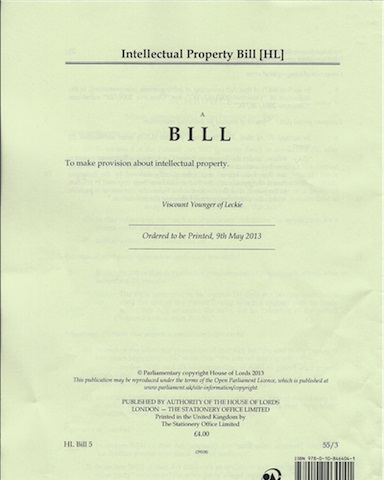
Intellectual Property Bill
The Intellectual Property bill had its Second Reading on 22nd May. Whilst most of it's provisions are welcome there are a number of omissions that we argued should be corrected during the passage of the Bill through the House of Lords, in particular to align criminal offences for registered designs with those of unregistered design, to provide a remedy for lookalike products which mislead the consumer and to align criminal penalties for digital and physical copyright infringement.Read more