

The Government Needs to Support our Threatened Creative Sectors post COVID
I recently took part in a Liberal Democrat debate initiated by my colleague Baroness Lynne Featherstone on the Government’s policy and spending on the creative sector. A key theme running through the whole debate was the importance of creativity, not just to the cultural sector but right accross the economy especially tech.
Here is the full debate
This is what I said:
The pandemic has had an impact on livelihoods in the creative, arts and entertainment sectors. I want to talk about a number of current threats to independent producers, our book and fashion sectors, authors and our music industry.
The first threat is the situation in which our independent film and TV production companies find themselves as a result of competition from the major studios and streaming services such as Netflix and Amazon. The growth of the UK as a destination for film and TV production has been so swift that there are now insufficient skills and crews. If we cut corners, quality will decline. We have a similar situation in competition for access to facilities, with independents being priced out. Steve McQueen, the maker of “Small Axe”, could not afford London—the location where its events took place—and had to shoot in Wolverhampton instead.
We need to tackle the overheating of the sector that is taking place. In particular, we need to expand the training and skills pipeline, as my noble friend described, rather than cutting funding and threatening to limit the number of people taking creative arts degrees. Where is the promised £90 million-a-year arts premium for schools? Where are the reforms to the apprenticeship levy? As my noble friend mentioned, Kingston University’s future skills league table shows that creative skills are in demand right across the economy; of course, the noble Lord, Lord Spencer, also made that point. Independent producers have described their great concern about the Government’s proposal for the future of Channel 4, which commissions hundreds of independent British companies that can exploit the intellectual property in programmes around the globe.
I come to our renowned, world-class book sector and the consultation over the post-Brexit copyright exhaustion regime. Copyright is key to the book trade, as it offers a bundle of rights that enable authors to protect their intellectual property and benefit from it. This right means that authors or their publishers can control the distribution of their book in a particular market, as long as their rights have not been exhausted. However, the IPO is currently considering a change to the UK’s copyright exhaustion framework—specifically, the introduction of an “international exhaustion regime”. This would have a devastating impact on UK publishing and a huge knock-on impact on UK authors’ incomes.
By the same token, the impact on the fashion industry of a switch to international exhaustion, in particular on our global London Fashion Week, could be significant. What is the Minister doing to ensure that the creative industries’ concerns, including those of the publishing and fashion sectors, are properly taken into account? What analysis has his department done on the impact that an international exhaustion regime would have on the UK’s publishing and fashion sectors, or on the UK creative industries’ exports?
Post Covid, many authors are in a very difficult situation. The Society of Authors survey found that
“49% had lost more than a quarter of their income by October 2020 … Only 28% got help from the first two payments of the Self-Employment Income Support Scheme.”
Hundreds of libraries have closed across the country over the past decade, which has reduced public lending right income. The single most effective thing that the Government could do would be to increase the public lending right fund available for distribution, which currently stands at a mere £6.6 million, has been frozen for a decade, and is half the amount of the ones in Germany and France.
Finally, I turn to the threats to the music industry, with which I have a long association. UK Music recently unveiled its annual report, This Is Music 2021. It has revealed the devastating impact of Covid-19, which wiped out 69,000 jobs—one in three of the total workforce. Studios and venues were forced to close, and musicians and crews were unable to work. In a sector where three-quarters are self-employed, many were not covered by government support schemes. UK Music has drawn up the music industry strategic recovery plan, which outlines five key areas where swift action is needed: tax incentives; urgent action to remove the barriers to touring, which my noble friend Lord Strasburger will talk further about; a permanent reduction in the VAT rate on live music event tickets; more funding and support for music exports; and boosting funding for music education and for the self-employed to secure the talent pipeline. Where do the Government stand on these requests to help to save some of our critical creative sectors?


Lord C-J Questions Touring Negotiation Failure
I questioned the Government on its total failure to negotiate a deal with the EU. It is clear the Home Office refused to grant EU citizens 90 day Permitted Paid Engagement. Touring musicians and creative artists have just been sacrificed on the altar of Tory immigration policy

My Lords, touring musicians and creative artists are deeply angry at this negotiating failure. Is not the root of the problem refusal by the Home Office to extend permitted paid engagement here to 90 days for EU artists, meaning as a result that work permits will now be required in many member states for our artists? Will the Government urgently rethink this and renegotiate on the instrument and equipment carnet and on trucking issues?
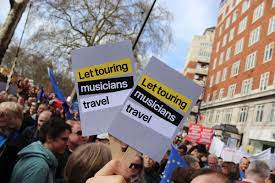
Lord C-J : Give Musicians the Freedom to Tour
At a recent debate colleagues and I heavily criticized the Government’s failure to secure a cultural exemption from cabotage rules in the EU trade negotiation
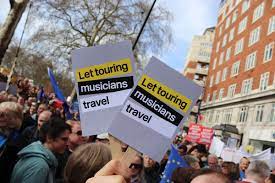
My Lords, I join with other noble Lords in pointing out that the issues on cabotage are part of a huge cloud now hanging over the creative sector, including the requirement for work permits or visa exemptions in many EU countries, CITES certificates for musical instruments, ATA carnets for all instruments and equipment, and proof of origin requirements for merchandise. Cabotage provisions in the EU-UK Trade and Co-operation Agreement will mean that performers’ European tours will no longer be viable, because the agreement specifies that hauliers will be able to make only two journeys within a trip to the EU. Having to return to the UK between unloading sites in the EU will have a significant negative impact on the UK’s cultural exports and associated jobs.
A successful UK transport industry dedicated to our creative industries is at risk of relocation to the EU, endangering British jobs and jeopardising the attractiveness of the UK as a culture hub, as support industries will follow the companies that relocate to the EU. What proposals do the Government have for a negotiated solution, such as they have heard about today, that will meet their needs?
Prime Minister Sacrificing Our Creative Industries on the Altar of Sovereignty
Lord C-J on the Brexit betrayal of our creative industries

UK Music Host Expert Panel on the Talent Pipeline at Lib Dem Conference
The panel, which was chaired by UK Music CEO Michael Dugher, took place at the Metropole Hotel on Monday lunchtime. Read more

A heartfelt celebration of the Life of Jonny Walker Campaigner Extraordinaire
At a wonderful jam packed service in Leeds Minister we celebrated the life and personality of Jonny Walker. This was my tribute.
Jonny was a man with a mission.
With his Keep Streets Live Campaign he was one the most determined, articulate and effective campaigners for a cause I have ever encountered. I first met him at a meeting of the London Busking Taskforce set up by the London Mayor’s Office to ensure that voluntary solutions to any busking issues were found rather than resorting to heavy handed bureaucracy.
Ironically as we met in City Hall a band of young musicians was being arrested for busking in Leicester Square.
I then hosted another meeting of the group at the House of Lords. Our work resulted in the launch of Busk in London and a new voluntary code of busking conduct across the city.
We were all veterans in one way or another of live music campaigns but Jonny was exceptional. Jonny was a active busker the length and breadth of the country and had experienced for himself the attempts by local authorities to restrict what they saw as a social nuisance but which he and we saw as an attempt to stifle street musicians and freedom of expression.
He had already shown how voluntary agreements on busking could work and had persuaded Liverpool and York councils to adopt a voluntary code of practice.
As a demonstration of his dislike for compulsory restrictions he took Camden Council to court for adopting an onerous busking licensing scheme under the London Local Authorities Act.
"What made Jonny so special was his mischievous sense of humour allied to his deep understanding of the legal issues involved."
— Tim Clement-Jones
What made Jonny so special was his mischievous sense of humour allied to his deep understanding of the legal issues involved.
A great example was when he and fellow buskers launched “The Church of the Holy Kazoo” religious group in Camden because the licensing scheme introduced by the Council didn’t apply to religious groups who wanted to perform. So Jonny and his colleagues created a new religious group to get round the restrictions and illustrate the futility of this new licensing regime.
In the same vein he was a great exponent of using YouTube to embarrass officials over using unjustified powers. Many of us saw his Romford Youtube video and were shocked by how far we had come in limiting freedom of expression in British towns.
He will be mourned in Leeds and Norwich too where he was active. But his influence went much wider . He highlighted busking issues in Newcastle, Bournemouth, Doncaster, Havering, Ha Indy, Canterbury, Swindon, Birmingham, Oxford, Chester Exeter, Gravesham and Bath all the time campaigning against restrictions, some petty, some major, all designed to erode traditional freedoms through instruments such the new Public Space Protection Orders.
At the end of last year we heard that because of the efforts of Jonny and our campaign we have succeeded in changing official guidance to ensure that it is much more difficult to ban busking through these orders.
In their obituaries, so many of our local newspapers saw him as part of their local culture. They claimed him as their own. Every major city and town across the country will miss him. Who will fight the bureaucrats and push back against the gradgrinds now?
Jonny was a bright light, infectiously enthusiastic and extremely likeable. He will be missed by his loyal fans across the country. He will be missed by his fellow campaigners. With an eclectic collection of headgear on head, guitar in hand and maybe with kazoo in mouth, Jonny we will miss you sorely.

Lord C-J says Ministers must ensure the multi-billion pound fashion industry industry is not put at risk
This is a piece I recently did for the House Magazine: ‘From fashion to furniture, Britain’s design sector relies on EU protections, writes Lord Clement-Jones’.
It was notable from her speech at the Mansion House earlier this month that the Prime Minister has woken up to the threat to our broadcasters of exit from the EU through loss of country of origin rules – the rules which have enabled the UK to operate as an international broadcasting hub.
The fact is, however, that this is but one of the many severe threats to our creative industries posed by Brexit.
The Prime Minister also needs to recognise the threat posed by Brexit to the design sector, which includes the fashion industry and furniture lighting and furnishings and many other design areas, from the potential loss of European unregistered design rights for United Kingdom-generated designs.
European design laws protect the individual character of a design, in particular as they relate to shape, texture, contours, lines, colour, ornamentation or materials. UK unregistered design right protects only the shape and configuration of a design.
Recently the Law Society made the news when it revealed that London Fashion Week is under serious threat from Brexit. They said it could lose its status as an event where new clothing creations are unveiled because laws that protect European fashion houses from unauthorised copying may no longer apply in London when Britain leaves the EU next year.
Fashion houses that first reveal an unregistered design on the London catwalk would be at risk from copies going on sale in the EU.
"As the majority in the industry are micro and SME design innovators with less than four employees they are particularly vulnerable to infringement of their designs."
— Lord Clement-Jones
In 2016 the value of UK fashion and textile exports stood at £9.1bn. The fashion industry, through the British Fashion Council, has highlighted the serious consequences for British fashion designers if they lose unregistered EU design rights protection in the other 27 member states. Potentially losing the protection currently available under EU law will leave these UK designers in a disadvantageous position versus their EU competitors.
These are typical but high profile examples of how designers across the board may be forced to launch new designs in EU countries after Brexit.
The potential impact to our economy is massive. UK design and design skills in the UK are currently worth a startling £209bn. This is put at risk if legal protection for design IP is weakened.
The reason for this is that copying is endemic not only in the fashion sector but in the lighting, furniture, furnishings, gift and product and many more design sectors, all of which will also be affected by loss of the EU unregistered design right. As the majority in the industry are micro and SME design innovators with less than four employees they are particularly vulnerable to infringement of their designs.
In the Lords this Thursday I will be seeking a firm assurance from the government that it will provide a solution to the potential loss of EU design rights in one of the fastest growing sectors in the economy. I will be calling on ministers to end this major threat to our design sector and introduce legislation which will offer the same EU unregistered IP rights’ protection as they now enjoy in 28 member states.
Unlike some other Brexit conundrums, in this case the solution lies in government’s hands and we and the design industry have every right to expect urgent action.
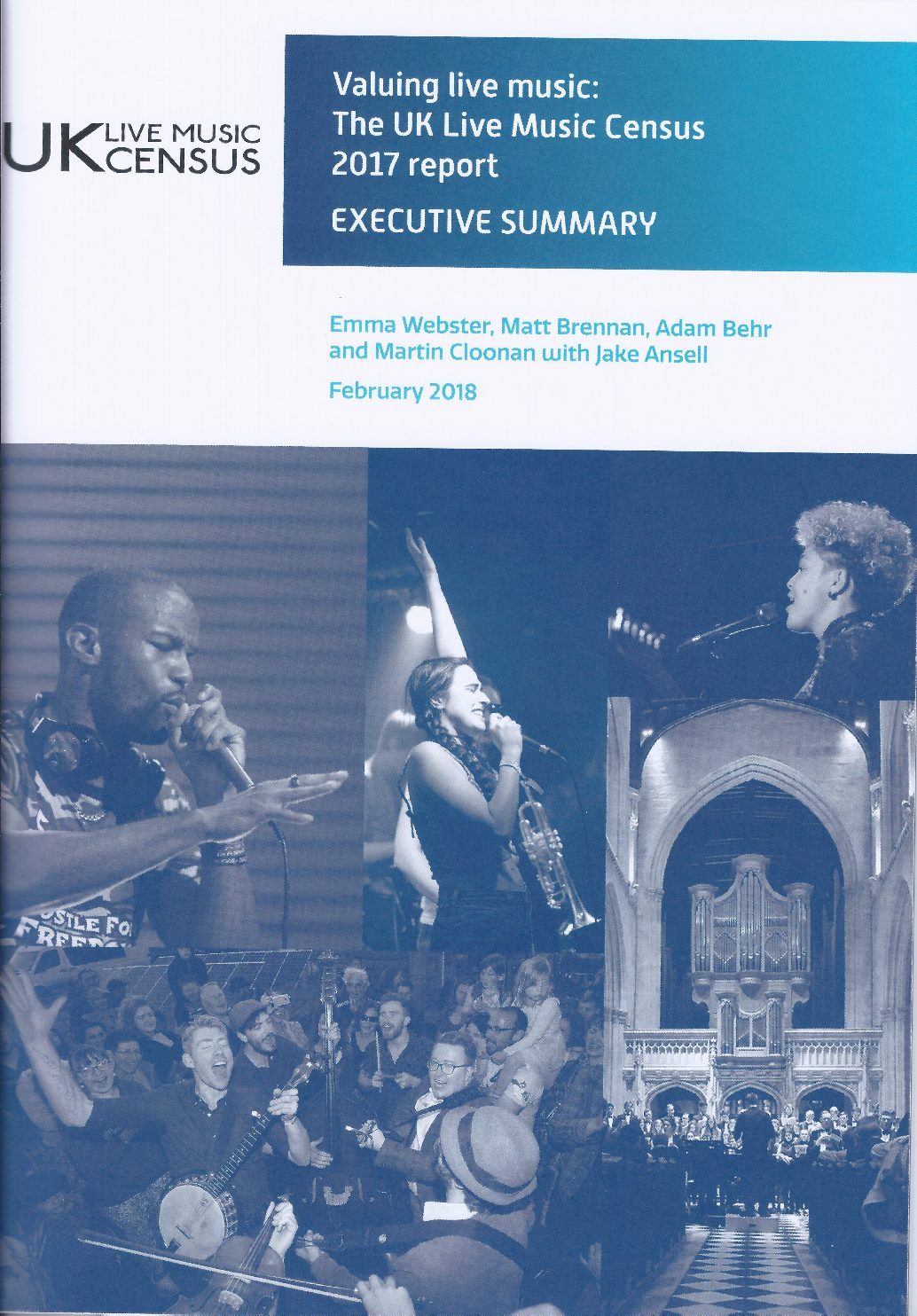
Lord C-J helps launch the 2017 Live Music Census Report
I recently helped to launch the excellent Report on the 2017 Live Music Census carried out by Emma Webster Mat Brennan, Adam Behr, Martin Cloonan and Jake Ansell at the Musicians union HQ in Clapham Road. I was asked to give an overview of Parliamentary progress in supporting grassroots music venues. This is what I said:
First of all many congratulations to Emma , Matt, Adam, Martin and Jake for a really impressive high quality report. In this company I can say they make a virtuoso quintet!
It will really underpin and validate the case that so many of us are making inside and outside Parliament about the importance of live music and the closures and potential threats to grassroots music venues, which are such an important part of our music scene both for audiences and musicians.
Just a couple of weeks ago, many of you will remember, there was a very impressive turnout by peers and MP’s in support of John Spellar’s Agent of Change Bill outside Parliament .
The sheer support for the Bill and the far greater interest by Parliamentarians in the welfare of Grassroots Music Venues will be reinforced by the research carried out by the authors of this UK Live Music Census but is also testimony to the concerted activities over the past few years of campaigners such as UK Music, the Music Venues Trust and the MU and many in this room. We are now creating a much bigger campaigning community for music in Parliament.
Parliamentarians are now much more alive to the fact-as shown in today’s report-that there has been in recent years a perfect storm of circumstances for the night-time economy, resulting in a continuing decline in grassroots live music venue and they realize that once gone, these venues will not come back into our towns and cities.
The report itself highlights rising rents and business rates, planning and property development issues, and noise related complaints as the key contributing factors.
There have however been some individual bright spots as result of these issues being raised by campaigners. The campaign for Agent of Change is a case in point.
As a result of a campaign in a previous Housing and Planning bill, Agent of Change principles were made to expressly cover conversions but did not cover new build.
After the introduction of John Spellar’s new Bill which expressly provides for this, Sajid Javid has agreed to include the principle “in detail” in the National Planning policy Framework which will make housing developers building new homes near UK venues responsible for addressing noise issues and this should help protect venues from any new build development in their nearby vicinity.
Also there seems to be some daylight on business rates reform in terms of an indexation switch to CPI, . A discount for pubs is welcome but relief needs to be extended explicitly to grass roots venues as a whole. The London Mayor’s Economic Development strategy recognizes the issue for the London’s night time economy and is pressing the Valuation Office Agency to review its valuation policy, which would be a step in the right direction. But all this needs to happen quickly and it needs to be nationwide.
"We are now creating a much bigger campaigning community for music in Parliament."
— Lord Clement-Jones
Then there is the whole question of secondary ticketing.
In the last couple of years the campaign to stop the rip off against fans by the All Party Parliamentary Ticketing Abuse Group, groups like FanFair Alliance, trade bodies like UK Music and the MMA has by and large achieved a great deal. First of all amendments to the information requirements on ticket resellers through the Consumer Rights Act and then last year in the Digital Economy Act with the outlawing of bots buying up tickets on an industrial basis.
New guidance under the Consumer Rights Act makes it absolutely clear what information must be provided by secondary sellers and provide better protection for audiences, artists and event organisers.
The next step was to make sure that these laws are being obeyed. Having looked at this as a result of debates on the Consumer Rights Bill, the CMA last November reported that it is now taking enforcement action against some of the offending Secondary sellers, and enquiring further into their practices.
At the end of the day however, welcome though all these developments, there is more to be done. And urgently too. Venues are still closing. We need a comprehensive approach to the protection of these venues. That is why I welcome the new enquiry into Live Music being undertaken by the DCMS Select Committee
Specifically as part of that they will be asking : “How the music sector been affected by the closures of small music venues across the country,? Should small music venues be classified as cultural venues? What initiatives can be put in place to help grassroots artists and bands?”
This report will be hugely helpful in setting the scene for the Select Committee.
We need to look at ideas such as a Culture & Heritage Investment Tax relief as Music Venue Trust suggest in their evidence and imaginative schemes such as their Sound+Vision plan.
I hope UK Music will return to the idea of an amendment to the Licensing Act which would create a fifth licensing objective that would oblige licensing authorities to consider the wider benefits of music and entertainment in the community when carrying out their functions. As is stands, the cultural contribution of a grassroots music venue is not considered at all.
Having this fifth objective might just be the critical edge to a decision that will either lead to a venue closing or to it remaining open.
I don’t often quote Ed Vaizey but I thoroughly agree with what he said 2 years ago at Venues Day: “ A vibrant music venue which is breaking new acts has just as much right to be considered a cultural venue as a local or regional theatre”
So we need to make sure that Arts Council England treats Grassroots music -as they do on the continent- as an essential part of our cultural scene. It seems completely weird that the British Council do when our artists tour foreign venues but the Arts Council don’t recognize this.
We mustn’t build our expectations too much but the Select Committee has a good track record and it could produce an important platform for a new set of campaigns.
Enough from me . I was only meant to do a few riffs, so I’d better get off the stage!
Stay in the Single Market and Keep the Country of Origin Principle says Lord C-J
I asked the Government this week what assessment they have made of the ability of United Kingdom audiovisual services to take advantage of the European Union country of origin rules after Brexit. This is the exchange with Lord Ashton of Hyde the Minister at the Department for Digital, Culture, Media and Sport.
My Lords, the broadcasting industry has continuously emphasised the significance of maintaining the country of origin principle. We are committed to working with the sector to ensure that those points are explored and considered as the UK develops its stance on exit negotiations as part of the overall effort to secure the best deal for the UK as a whole. The effect of leaving the EU will depend on the exit negotiations.
I replied
My Lords, there are hundreds of channels based here which are broadcast to the EU and get the benefit of a single regulator in the form of Ofcom. The Creative Industries Federation states, in its report today on global trade and Brexit:
“To ensure the UK remains a leading hub for international broadcasters, the continued mutual recognition of broadcasting licences between the UK and EU Member States is imperative”.
Does the Minister agree with that statement, and will the Government treat this as a priority in trade negotiations? Is this not another example of where the straightforward solution would be to stay in the single market?
And Lord Ashton of Hyde responded
My Lords, I am very pleased to confirm to the noble Lord that we will treat this as a priority. Of course he is right that the broadcasting industries are one of the UK’s success stories. In fact, 55% of the TV channels based in the UK mainly targeted the European market in 2016, and 53% of the video-on-demand services primarily targeted the EU. It is definitely one of the top priorities of my department, and we communicate regularly with the Department for Exiting the European Union to ensure that it is one of its.
"Does the Minister agree with that statement, and will the Government treat this as a priority in trade negotiations?"
— Lord Clement-Jones
Lord C-J Calls for Action on Museum Finance
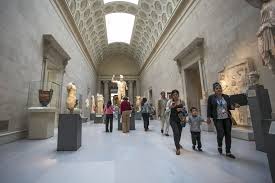
In a speech in the House of Lords recently I highlighted the problems faced by museums and galleries and the need to go further than the recommendations made by Neil Mendoza in his report last December.
My Lords, we have heard an impressive range of speeches in this debate which have demonstrated the enthusiasm of this House for museums and galleries but also, I am sad to say, illustrating many of the severe problems that they face. I must congratulate that great heritage champion, the noble Lord, Lord Cormack, on instituting this timely debate. It is only too rare that we discuss this sector which, as we have heard, makes a great contribution to our culture, our creative economy, our tourism economy, to social well-being and the quality of our lives, and to our communities. I was taken by the description of the noble Lord, Lord Monks, of museums and galleries being a stimulant for creativity and innovation, and by what the noble Lord, Lord Rees, had to say about the ongoing impact on why people eventually do what they do; it is not purely down to the schools and universities they go to. Like him, I declare a strong interest not only as a regular visitor to national museums—only last night I was at the Science Museum for “Tomorrow’s World Live”, which was pretty exciting—but to university museums as the chair of the Queen Mary University of London Council. If any noble Lord has a slight taste for the macabre, it is certainly worth while going to see the astonishing Barts Pathology Museum in the West Smithfield campus.
As the National Museum Directors’ Council points out, eight out of the 10 most popular attractions in the UK are national museums, and 51.3% of UK adults visited a museum or gallery in 2012. But as the noble Lord, Lord Cormack, made clear, inevitably the context for today’s debate was provided by the Mendoza review published last November, entitled An Independent Review of Museums in England. Before that, we had the Government’s ambitious Culture White Paper and the Culture, Media and Sport Select Committee report in December 2016. At the time of the Select Committee’s report, the then Minister for Culture, Mr Matt Hancock MP, who is now the Secretary of State of course, said that he supported the aims of the White Paper and that he would continue putting its recommendations into practice, so I take some comfort from that.
The Select Committee and the Culture White Paper both emphasise the need for access, diversification and partnership working. I say “hear, hear!” to that. The principal recommendations set out in the Mendoza review were described succinctly by the noble Lord, Lord Kirkham, while the noble Viscount, Lord Eccles, was right to pick out a particular recommendation for a clearer museums role for DCMS. If that is not a veiled criticism, I do not know what is, and I strongly support what the noble Viscount had to say. Some good recommendations were made in the review, and I welcome the response made by Arts Council England. It states that over the period 2018 to 2022 it will invest £36.6 million per annum in museums, which is 9% of the total national portfolio spend. It has also committed that from 1 April 2018 it will open up its redesigned grants for the arts funding programme.
There are some important elements in terms of the response to the review, and I welcome the museums action plan recommended by Mendoza, which I understand will be delivered by Arts Council England and the Heritage Lottery Fund by September this year. It will also be facilitated by DCMS, so perhaps the department is beginning to become more engaged. However, given the financial problems that many museums face, this is no guarantee of survival and we need to do more. As the noble Earl, Lord Clancarty, pointed out, the bare fact is that the Museums Association has stated that despite recognising the severe funding difficulties being experienced by many museums—the Government’s own figures show that local authority funding for museums in England was 31% lower in 2016 than in 2010—the report fails to identify any new resources or capacity to improve the sustainability of the sector, although, as the noble, Lord Cormack, has pointed out, the sums involved are rather small.
"This is no guarantee of survival and we need to do more."
— Lord Clement-Jones
There are funding issues that need tackling. When we were in coalition, a four-year pilot of operational and financial flexibilities for national museums to assist their capacity to generate commercial and philanthropic revenue and to operate efficiently was set up. What has been the evaluation of that pilot scheme? Much mention has been made throughout the debate of the importance of the National Lottery, but one of its founding principles was that there should only be one National Lottery. This is not the situation today. There is the Health Lottery, which is one in all but name. This damages its ability to raise funds for good causes, such as museums. What do the Government plan to do about that?
As a number of noble Lords pointed out, including the noble Viscount, Lord Falkland, we need to increase the appetite for philanthropic giving. There is kudos involved, but matched funding from public funds acting as an inducement is additional to that. A crucial lesson has been learned on the importance of investing in the teaching of fundraising skills. The Creative Industries Federation has argued that we need to incentivise greater corporate giving and we should consider something like the Rouanet law in Brazil, which allows companies to offset donations to the cultural sector against the corporate tax bill. There are a number of aspects that the Select Committee asked the DDCMS to work on in VAT business rates, tax incentives and so on. My noble friend Lady Grender talked of creative enterprise zones. Those are of course important.
What is the Tourism Industry Council now doing relative to museums? Why are museums not represented on it anymore? Will the tourism sector deal agreed as part of the industrial strategy encompass museums? There are many other issues that I could raise relative to museums. I hope that the DDCMS gets into hyperactive mode.