
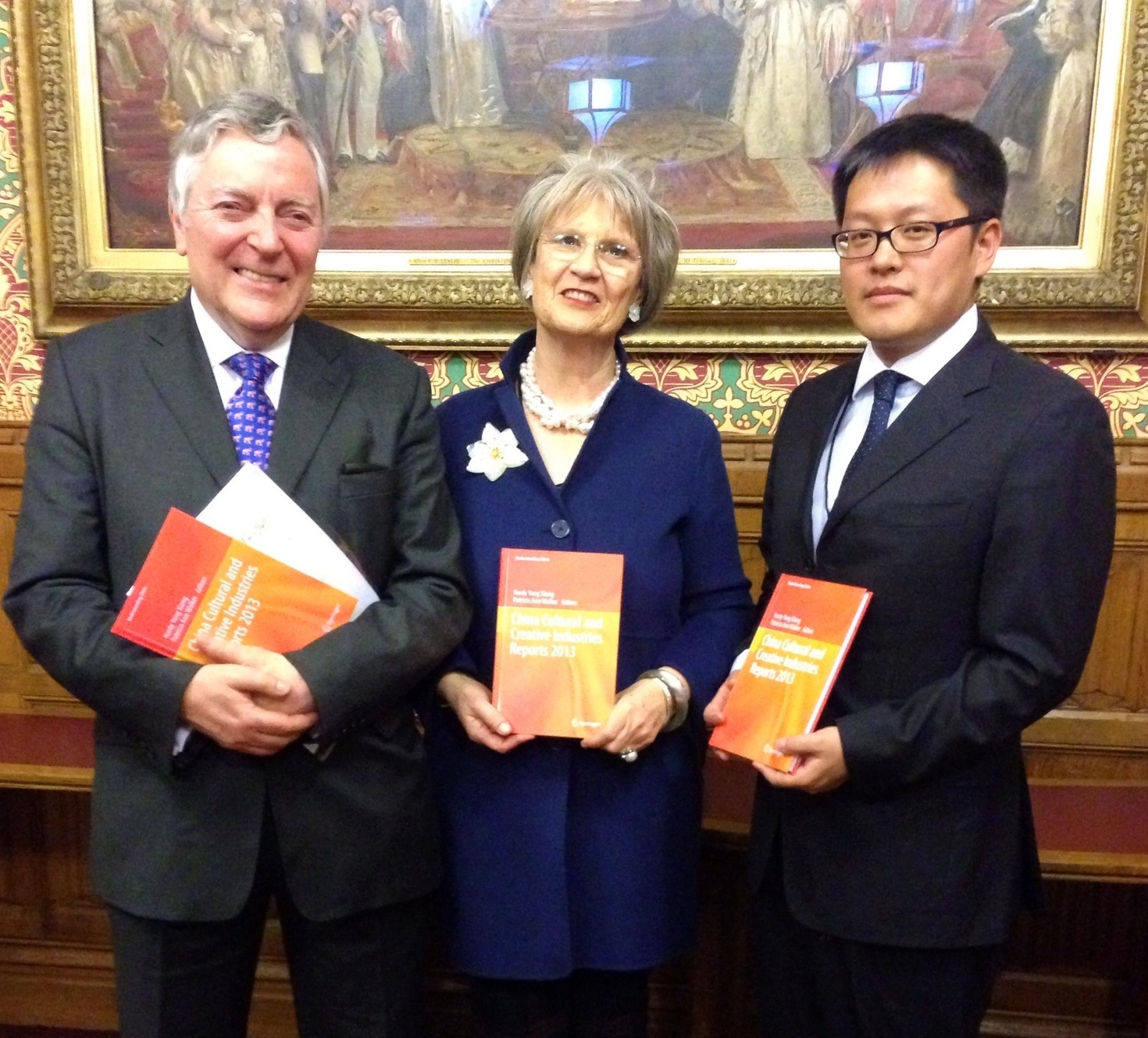
Launch of China Cultural and Creative Industries Reports 2013
Last week I helped to launch a fascinating set of reports on China's creative industries edited by Professor Trish Walker and Professor Hardy Yong Xiang.
See the weblink here:
http://link.springer.com/book/10.1007%2F978-3-642-38157-7
I've done a foreword in which I discuss the opportunities for creative partnership between Britain and China. This publication will help enormously in developing those partnerships.
Here is what I said:
Creative employment in the UK provides around two million jobs, in the creative sector itself and in creative roles in other industries. In recent times employment in the sector has grown at double the rate of the economy as a whole.
Something very important for the creative industries is also happening in China.
In business the emphasis is now on creativity. This is very much reflected in the 12th five-year plan that is underway and marks an important new approach where creative and artistic skills are being highly valued.
At the same time I have seen a great interest in China in creating partnerships with British creative industries and creators, particularly in games and new media, publishing, architecture, design, fashion, animation, music, film, radio, television and advertising, especially after the spectacle of the Olympic and Paralympic ceremonies and the success of the British pavilion at the Shanghai Expo.
We now have great opportunity for creative and artistic partnership between China and the UK. There is a real role for collaboration between us in helping developing creative industries clusters in China.
These reports will be invaluable in helping British creative industries develop a strong understanding of where they can develop partnerships in China, and I very much welcome Prof. Patricia Ann Walker and colleagues’ initiative in putting such a comprehensive publication together.

Why I am against the Assisted Dying Bill
Sadly I am unable to be present for and take part in the Debate on the Second Reading of the Assisted Dying Bill this Friday and I have been unable to reply to the huge volume of correspondence but I want to put my views on record beforehand
Some colleagues have changed their minds on the subject since Lord Joffe's Bill came to parliament a few years ago. I have not.
The Bill is designed allow doctors to give lethal drugs to adults thought to be mentally competent and diagnosed with less than six months to live.
There are many who view the safeguards in the Bill as inadequate and the systems to tackle undue influence inadequate . Mine are more fundamental-the inability of doctors and modern medicine to be at all sure about prognosis and life expectancy.
My late wife Dr Vicky Clement-Jones for example was given 3 months to live with late stage Ovarian Cancer but survived for 5 years and in that time established Cancer Bacup's Cancer Information Service now run by Macmillan Cancer Support.
This is an extract from Dr Ruth Johnston to Lord Carey, formerly Archbishop of Canterbury which sums up my thoughts entirely:
I write as a doctor working in oncology, with relation to the article you authored in the 'Daily Mail' on 12th July 2014.
I work primarily with patients who have lung cancer. The majority of these patients have Stage IV (metastatic) disease, which is inoperable and incurable, and in whom the median survival is generally of the order of 6 months.
I offer my patients the opportunity to discuss prognosis, and if they want to know this information, I explain that median survival is the time when 50% of patients (with their particular disease type and stage) are alive and 50% are dead. I always explain that predicting survival times is difficult and that some patients do much better than their doctors initially expect. I still review several patients who were originally considered by their oncologist to have a prognosis of less that one year, yet who are alive between 3-5 years after the initial diagnosis.
I write this to explain that determining prognosis, even in a quite predictable disease such as cancer where there are survival statistics available, is difficult, non-exact, and prone to error even among the most experienced practitioners. It is important to recognise that there can be a considerable range of survival times and that long term survivors are known in patients assessed by an oncologist and considered to have 'terminal cancer'.
The ability to determine prognosis in other diseases, such as progressive neurological diseases, chronic heart, lung or kidney disease etc. is much more difficult, and prediction of survival times is prone to even more significant error.
In a Bill which allows there certifying doctors no requirement to know the patient in question, I think it is unlikely that a doctor who has not met the patient can provide accurate information on prognosis for differing disease types and stages.
I have reflected on the effect implementation of an Assisted Euthanasia Bill would have on my practice: while advising a patient with Stage 4 lung cancer of their diagnosis and treatment options and providing prognostic information, my patient and I would be aware that the an assisted death would be a possible 'option' given their short survival times (i.e. as per the proposed Bill 'reasonably expected' to die within six months). I think that an 'assisted dying' option would negatively impact my relationship with my patient, who might fear that I and the other health professionals involved in their care might not offer the full options of treatment available, or that by discussing survival times doctors might have the motive of opening up the patient's consideration of assisted dying.
Symptoms of fatigue, depression and, not infrequently, disability, are often seen in patients with advanced malignancy. Assisted dying is conceivably going to be offered to patients who have the potential for reversibility of symptoms and alleviation of distress with the help of (among others) oncology, palliative medicine and general practitioner services. I am concerned that my cancer patients who often have understandable anxiety and depression at their diagnosis, may fear being a burden to their family and the health service, and choose an assisted death. A painful death or terminal suffering is not common in cancer patients: raising the fear of the death process may cause my lung cancer patients to feel they should end life early, rather than risk a difficult death.
To me the Bill is completely perverse to a medical practitioner. I trained and practice in medicine to help patients, to preserve life and to 'first do no wrong'. Killing is wrong, and it is wrong to ask a doctor to prescribe a deliberately lethal dose of medicine, while also anticipating the same doctor will care and cure.

Speech on startups gets a response!
The day after my creative industries speech I was delighted to receive the following email from Care Home Owner David Crabtree. As I said to him "You inspire me back. It's really good to know someone is listening! Please do persevere with your project"
Dear Lord Clement - Jones
By chance as I switched on my TV this morning at 6 a.m as you were delivering a speech and outlining the many resources for funding and encouragement of digital and other media start ups.
Your speech was inspiring, very informative, and extremely well delivered as I would normally have skipped the TV channel.
I have been nursing for over forty years and whilst many were spent in the field of addiction working with alcohol and drug dependents and their families, I started out and now finish my career working with people and their families who suffer from dementia.
Many are under 60 and their dementia, Korsakoffs has been brought about primarily by the addiction to alcohol.
It is in doing this work, I have been trying to source a digital watch which will alert the family member to someone leaving the home, combined with a gps tracking system which will locate the watch and it's wearer should they go beyond a pre set parameter.
Many years ago I was a nurse in a ward where someone wondered off and despite police helicopters and tracker dogs they were found dead some three days later. The police resources we spend looking for people with dementia is very costly.
I have now sourced one in the UK but the costs may be too prohibitive at the moment for general use, which is why your speech was so informative and timely.
In working as a counsellor with addiction and families one never knows if the information you give out will be of any use, as it can take many years and attempts to get clean, as I know only too well from person experience, so the saying in AA is that a flower never sees the seed.
Today your speech has inspired me to see if the technology and start up funding for the watch is available in the UK, and I wanted to both acknowledge your work and thank you.
My best wishes to you and your family , and should you come North meeting for coffee would be a great pleasure for me.
Many thanks again for all the work you do on behalf of so many of us.
David Crabtree R.M.N
www.crabtreecarehomes.co.uk<http://www.crabtreecarehomes.co.uk>
http://m.youtube.com/watch?v=Q4kqLeMoSi8&feature=plc

Lord C-J Debates Rule of Law and the global role of English Law and Lawyers
In a recent debate on "the contribution of the legal systems of this country to the international standing of the United Kingdom and the observance of the rule of law in this country and abroad" I described the important role of the legal profession here and abroad..
http://www.publications.parliament.uk/pa/ld201415/ldhansrd/text/140710-0002.htm#14071063000808
As Lord Hodgson, said earlier in the debate, the rule of law in the English legal system is a major source of British influence abroad, as the recent report by the Select Committee on soft power of this House made very clear.
I had the great pleasure recently of participating with the noble and learned Lord, Lord Woolf, in a conference on the rule of law in Turkey, which was a very timely reminder in that country of the essential values inherent in the concept of rule of law, and I thank him for initiating this superb debate today. Many noble Lords have mentioned the fact that next year we are celebrating the 800th anniversary of Magna Carta through the Global Law Summit and other events. It is particularly important that we hand down this tradition to each new generation and that they are made aware of how precious it is.
The rule of law is not only a philosophical ideal and a bastion of individual rights. Our legal framework is critical to economic development, to the creation of jobs and to a successful market economy. A key factor is the integrity and independence of the judiciary and, as my noble friend Lord Marks said, London has become a world leader in dispute resolution. English legal practitioners are another reason for using English law. We have a long and well respected tradition of excellent legal services based on trust and performance. Huge effort over the past few years is beginning to result in a much more diverse profession, with commitment to the PRIME initiative by an alliance of law firms and legal departments across the United Kingdom to broaden access to the legal profession. Pro bono ethos and practice is much more embedded, too, within the legal profession. The noble Lord, Lord Livingston of Parkhead, in his first contribution to this House last December, confirmed his view that the legal services sector is one of the most important sectors for the UK. In fact, it employs almost 350,000 people. The noble Lord, Lord Pannick, referred to the fact that the rule of law is now one of Britain’s great exports; exports of legal services totalled more than £4 billion last year.
Our law and law firms are becoming ever more international to meet the needs of businesses. Law firms such as my own have responded by becoming international in their own outlook, establishing a global presence. There are close links between legal education, our laws and the legal sector. We attract students from all over the world. This needs to be nurtured. The coming decade promises to see increased competition as other cities such as Paris, New York and Hong Kong aspire to compete with London as a world leader in legal services.
We also face legislative threats such as the common European sales law being proposed by the European Commission as an EU civil law alternative to English common law. Protectionist regulations in growth markets such as India and a number of other emerging markets are, however, a major stumbling block, inhibiting the export of UK legal services and, indeed, opportunities for their own lawyers. The profession and the Government have, rightly, made persuading emerging markets to tear down their barriers to entry a key priority. Staring in 2011, the Ministry of Justice’s Plan for Growth set out the importance of English law and English legal services to the UK economy, and the need to open up overseas markets.
Our position in Europe is vital in achieving this goal. Another benefit from the EU is the freedom of establishment under the establishment directive. No wonder that, according to a recent CBI survey, two-thirds of law firms think that leaving the EU will have serious negative consequences. The challenges we face to ensure that the UK remains the world leader in the rule of law, in our standards of justice, in the provision of legal services and in the opportunities that exist in international jurisdictions are significant. However, we can meet them if we heed today’s warnings. I hope that we will be able to fulfil, as Ken Clarke said when he was Lord Chancellor, the UK ambition of becoming lawyer and adviser to the world.
Lord C-J argues for ticket abuse legislation
In the recent 2nd Reading Debate on the the Consumer Rights Bill I argued strongly for new legislation to prevent ripping off of consumer by secondary ticketing sites as suggested recently by the All Party Ticket Abuse Group.
see here
http://www.publications.parliament.uk/pa/ld201415/ldhansrd/text/140701-0001.htm#14070156000078
"There is then the whole question of ticketing abuse. Increasingly—as Channel 4’s “Dispatches” investigation and the BBC’s “Watchdog” have shown—professional secondary ticketing touts buy tickets solely with the intention of denying them to real fans, to whom they then resell their tickets at inflated prices.
With internet ticket selling becoming more streamlined, touts are able to use sophisticated computer systems to buy large volumes of tickets automatically, seconds after they go on sale. That often means that it is practically impossible for genuine fans to access the event. An artificial shortage of tickets and an inflated secondary market are created. Content providers gain no share whatever of the inflated prices charged.
As the All-Party Group on Ticket Abuse—of which I am a member—noted, that market does not adhere to the same principles of transparency and consumer protection as other markets. Members of the group believe, as I do, that the large-scale, unauthorised resale of event tickets is against the interests of both consumers and content creators. We believe that the solution is greater transparency in the secondary market and a greater ability for event holders to control who can resell their tickets. The Metropolitan Police report drawn up by Operation Podium after the Olympic Games stressed the need for an open and transparent system for ticket reselling, with clear and appropriate regulations. Secondary websites should be required to publish full details of the ticket being offered, including the original face value, seat number and location. They should identify the seller, state whether or not the seller has the permission of the originator to resell the ticket, and declare where the tickets are being listed by the event organisers."

Lord C-J on Startups: Financing getting better but major skills gaps
In many respects the Queen’s Speech is to be welcomed, precisely for the fact that it does not contain a huge amount of new legislation. None the less, I welcome the carryover of the Consumer Rights Bill and the Deregulation Bill. Curiously, I note for the aspiring statesmen among us that it will, among other things, make statues easier to erect. I do not know whether your Lordships noticed that.
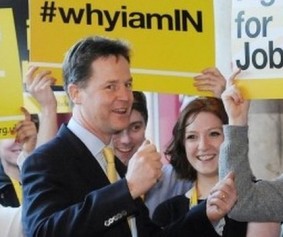
Nick Clegg: We're IN
Deputy Prime Minister Nick Clegg kicks off the European Election Campaign and the General Election Campaign too!
http://www.bbc.co.uk/news/uk-politics-26504083
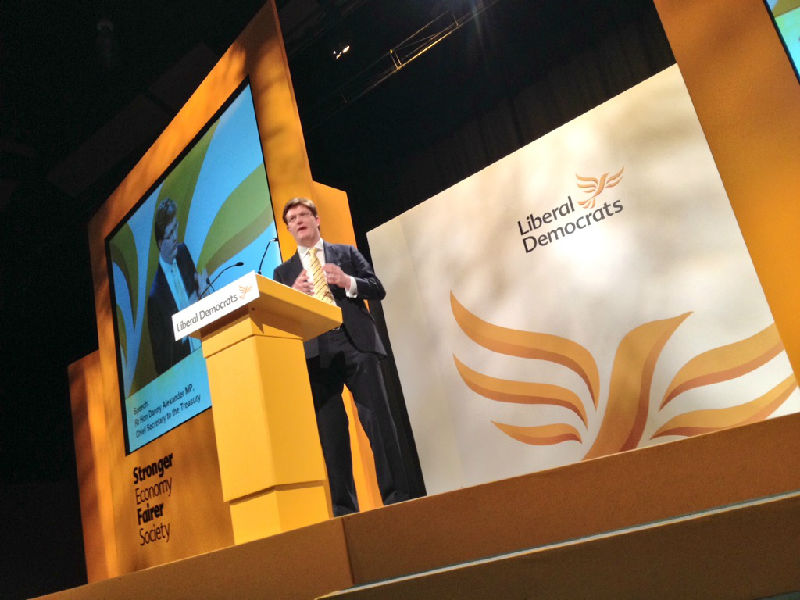
Danny Tells the Lib Dems' Record on the Economy
Excellent speech from Danny Alexander the Chief secretary at the Lib Dem's Spring Conference in York. A Stronger Economy and a Fairer Society indeed.
http://www.libdems.org.uk/danny_alexander_s_speech_to_spring_conference
TIF in Qingdao Debates Intellectual Property Protection
At the recent Technology Innovators Forum- TIF-In Qingdao I chaired a Roundtable session on IP. The aim was to provide practical suggestions for British and Chinese companies to maximise revenues and mitigate risks and identify follow up actions that can be taken on an industry to industry basis and/or to include in future government to government discussions.
In the earlier finance panel at TIF-IN the conversation rapidly moved on to the question of IP . The view of that panel was clearly that financing in this field becomes more uncertain and more unattractive without proper protection of this vital asset.
In our roundtable we were assisted by an expert panel:
- The UK IP attaché to China Tom Duke
- Max Hole, Chairman and CEO of Universal Music Group
- Guo Biao, China Director at the International Federation of the Phonographic Industry (IFPI) and Senior international music industry representative in Beijing,
- Mark Devereux, senior partner of media and technology law firm Olswang, Deputy chairman of the British Screen Advisory Council and previously the deputy chairman of the UK Film Council
- Andrew Wajs, the Chief Technology Officer of Irdeto an expert in the technology of protecting IP
We looked at the environment for Intellectual property development and protection applicable to the creative industries, internationally, and in China in particular and posed a number of questions.
- Is it common ground in fact that good IP protection is essential to underpin our current and likely future business models?
- What are the business models of the future that are best in tune with current protection of IP and the public’s willingness to value it?
- What are the barriers in IP protection and enforcement to exploitation of commercial content? Are the full range of IP rights recognized ? Are IP rights fit for purpose?
- How do we address issues of piracy and criminality in key markets in particular in relation to the internet?
- How to that end do we go beyond enforcement and influence and change consumer attitudes to IP . In particular can we educate young people that creators have rights and there is fundamental value in IP? Are there robust technological solutions to piracy and infringement? Can brand owners and credit card companies be persuaded to avoid rogue sites?
- Copyright in particular, is changing across the world to adapt to new conditions. Is this in the right direction?
- In China the IP protection regime is rapidly changing- for the better as several of our speakers yesterday emphasised – as Chinese homegrown IP grows in importance.But what are the current IP risks in China, whether in due diligence, contractual terms or legal provision and enforcement when doing business in China.
- What local action is needed to mitigate these risks?
- How are different aspects of IP treated eg know how, copyright and trademarks?
- How will all this impact on the future for UK-China creative industry partnerships in the sector?
"The regulatory and and legislative reform side and the development of education of the public and others in the value and importance of IP to the creative industries, both for their future viability and in their ability to deliver quality content."
— Lord Clement-Jones
Much of the discussion on this topics will be ongoing but it is clear that two strands are key:
The regulatory and and legislative reform side and the development of education of the public and others in the value and importance of IP to the creative industries, both for their future viability and in their ability to deliver quality content.
On the former front we need to stay abreast of the new business models and ensure reform in China and elsewhere is timely to enable creative content to be exploited. In particular performing right needs to be recognised in China. Some collecting societies need reforming too.
Positive technology and business models are emerging in the mobile sector in particular, but clear copyright laws are needed at the same time.
On the education front there is much that can be done to change attitudes to IP among the public and among search engine sites, brand owners and credit card companies. The BFI model is one that could be pursued by others.
It was the hope of many that the new Global Digital Media and Entertainment Alliance (GDMEA)will prove a useful vehicle for dialogue on IP and ensuring copyright reform in China alongside education initiatives.

Happy New Year of the Horse!
The 31st January this year marks the start of the Chinese New Year.
Gong Xi Fa Cai in Mandarin and Kung Hei Fat Choi in Cantonese to you!
The Horse is an energetic creature and apparently "the fire energies will be strong" this year. So let's make the most of it!