

Lord C-J debates the future of the BBC
Immediately before the publication of the Green Paper (BBC Charter Review Public Consultation) the House of Lords briefly debated the issues raised by the Chancellor's Budget decisions on the licence fee and the implications of leaks from the DCMS about the future of the BBC. This is what I said.
We have just witnessed a smash-and-grab raid. As five years ago, the Chancellor has treated the licence fee as a piggy bank. The director-general has had no alternative but to look cheerful about it, and all the while the Murdoch press gleefully gets government exclusives. I share the disappointment expressed by Rona Fairhead in her letter to the Chancellor last week about there having been no public debate at all about the licence fee. I think the CMS Secretary’s former colleagues on the Select Committee will be astonished, too.
Despite this, there are still major uncertainties. A Perry report recommendation to decriminalise could have an impact of £200 million. The CPI settlement now also appears conditional. We now at least have a debate going forward about the scope of activity of the BBC and the appropriate form of governance for the BBC, but the Secretary of State for CMS and the Chancellor seem to be in disagreement about whether the BBC should continue with popular programming. There is much talk of the BBC’s online presence but, as the example of Channel 4 shows, younger audiences are increasingly migrating to the internet, catch-up and streaming for television consumption.
There are issues to be discussed. In particular whether the BBC should or could move to a publisher broadcaster model. On the trust, my colleagues and I have never felt that the current structure properly resolves the issues of responsibility for the regulation, governance and management of the BBC. Like the CMS Select Committee, I would favour handing responsibility for regulation, including service licences, to Ofcom, as well as the existing responsibility for the public value test. We must have an open debate, and I ask the Minister: is the Green Paper on track for this week?
It is good that the BBC is mustering its supporters despite the sniping of the Murdoch Press and no doubt we will be intensively debating the issues in the months to come.
I also took part in the subsequent debate on the Question asked by Lib Dem colleague Baroness Grender focusing in particular on the Advisory Panel appointed by John Whittingdale the Culture Secretary which
- will meet frequently and contribute significantly to the Government’s charter review
- yet it has no terms of reference,
- will not take its evidence in public,
- and is not subject to appointment by reference to the Nolan principles.
As I said it is no surprise that even Tory peers described them as “assistant gravediggers” (Lord Patton) —and "they clank with special interests" (Lord Fowler)
http://www.publications.parliament.uk/pa/ld201516/ldhansrd/text/150917-0001.htm#15091736000665
The Future of the BBC was also debated by the Liberal Democrats at our Conference in Bournemouth and we will all be keeping a close eye on the review as it unfolds.

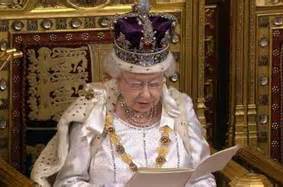
Lord C-J asks: Will this Government build on the achievements of the last?
This week in the debate on the Queen's Speech I urged the Government to build on the positive record of the coalition government in its support for the development of the UK's creative industries.
The UK’s creative industries have been one of the great success stories of the past five years. Significant policies benefiting these industries were developed during the coalition Government. I pay tribute to Vince Cable for all his work as the Business Secretary.
I want to see creative businesses continue to thrive across the whole country so that our economy can continue to reap the benefits. It is vital that we do not lose the momentum. Will this Government build on the achievements of the last? That is the question.
To maintain that momentum we need to encourage clustering of creative businesses developed through alliances between central government, local authorities, universities and the private sector in our major cities. Our cities and many counties need greater powers, especially over finance. I therefore welcome in principle the proposed cities and local government Bill as part of the Government’s northern powerhouse strategy.
Many noble Lords have talked about development of digital skills being vital. Expansion of digital platforms has highlighted the growing convergence of creative content and the tech sector. Skills in the arts and sciences are increasingly drawn together. Will the Government promote the value of creative subjects in schools and ensure that they are rewarded for offering a broad and balanced curriculum?
The number of apprenticeships created and taken up in the creative industries has expanded hugely in the past few years. I hope that they will enhance the co-ordination of action on skills by merging the two skills councils, Creative and Cultural Skills and Creative Skillset, into a single powerful and effective body. Will the Home Office break the habit of a lifetime and ensure with BIS that the tech and creative industries are able to fill the gaps in high-end skills, from abroad if necessary?
As we have heard today, our broadcasters are the linchpin of the creative industries and there are some key questions in that regard. Will the Government maintain Channel 4 in public ownership? Will they follow up the consultations started in March on Section 73 of the Copyright, Designs and Patents Act, which requires public service broadcasters to give away their most valuable product—their channels—to the pay-TV cable platform in the UK, and repeal it?
We had a mini debate on the BBC today and contributions on the BBC were made yesterday. Under John Whittingdale’s chairmanship, the Culture, Media and Sport Committee produced a valuable report on the future of the BBC with many useful observations and recommendations, including on governance and extension of the licence fee to iPlayer-only users, which can, and no doubt will, be taken forward into the charter discussions—and so too, I hope, will the committee’s views on the need for open and transparent discussions on the charter. Will there be a full and open debate on any decriminalisation proposals and will the potential financial cost of such a policy to the BBC be fully recognised? We need strenuously to protect the independence of the BBC. Currently, the licence fee is the best way of doing that. However, that does not mean that it needs to rise faster than inflation.
Investment in the UK’s creative industries can only really make a difference if their intellectual property rights, particularly those relating to the protection of their online materials, are properly understood and enforced. It was good to see the acknowledgement in the Conservative manifesto of the importance of intellectual property and of proper behaviour by search engines. However, I was rather baffled by some of the statements in the manifesto. It says:
“We will protect intellectual property by continuing to require internet service providers to block sites that carry large amounts of illegal content”.
I do not recall that we were able to persuade the last Government to bring in any legislation to do that. The legislation remained unenforced on the books, so I think there are questions to be asked about that. Is it not crucial that we should educate consumers on the importance of intellectual property and support initiatives designed to get voluntary agreement from the advertisers and credit card companies not to advertise on infringing sites?
Will the Government continue to support the long-term funding of the Police Intellectual Property Crime Unit, or PIPCU, which carries out such vital work? Will they increase sanctions relating to online offences in line with the recent government review of penalties for online copyright infringement, Penalty Fair?
I regret that we shall spend the next two years arguing about membership of the EU. I hope that, at the same time, the Minister will find time to work with our EU partners to ensure that proposals for copyright reform as part of the single digital market proposals do not damage our creative industries by limiting territorial licensing.
I very much hope that the Government will continue discussions with artists and creators on extending the law governing unfair contracts to include intellectual property contracts. I very much hope that, when possible under EU law, the application of public lending rights to remote e-lending will be extended.
II very much hope that the Government will continue to promote the value of live music despite the powers created in the Anti-social Behaviour, Crime and Policing Act, which are already being used disproportionately. I agree 100% with the noble Baroness, Lady Liddell, and with the comments made by my noble friend Lord Lee yesterday, on the importance of our tourism industry, which so far, even after five years of the last Government, has been treated as a Cinderella and holds such promise for job creation in the years up to 2020. Time will tell.
In her response Baroness Neville-Rolfe the IP Minister said:
"To make sure that the UK retains its position as the world’s best IP regime, we will also focus on a number of measures including: improving our rights-granting services; reforming the law to improve protection for businesses; striving to improve international patent systems; and educating businesses and consumers about IP. The consultation on Section 73 is continuing. The noble Lord, Lord Clement-Jones, is right to say that enforcement is incredibly important. It is great that we have managed to extend the life of PIPCU, and we are looking at future options for funding. He will also be very glad to know that we have used Section 97A to block access to websites alleged to host 10 million infringing e-books"
Lord C-J launches bill to cut FOBT stakes
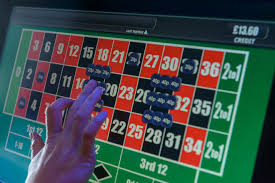
The first serious legislative attempt to enforce a reduction in the maximum stake for Fixed Odd Betting Terminals (FOBTs) is underway as my new Gambling Bill was published this week
FOBTs were first introduced in 1999 but particularly in the last five years, concerns have grown as it has become increasingly apparent that they account for the most addictive form of gambling with disturbing socially destructive consequences.
The growing level of public disquiet coupled with clear evidence of a link between the placements of FOBTs and social deprivation has led to the issue being called the ‘crack cocaine of gambling’.
The Gambling (Categorisation and use of B2 gaming machines) Bill proposes to cut the maximum stake on FOBT machines from £100 to just £2.
Leading social policy charity CARE, who campaign for legislative changes to the law to address problem gambling, has called on the government to recognise the need for urgent action by giving the Bill time in the House of Lords for a proper debate to take place.
The social disruption left in the wake of FOBTs, and growing level of public concern associated with them, is now such that the status quo is unsustainable.The law needs to change.
The reduction of FOBT stakes from £100 to £2 proposed by my Bill will transform FOBTs so that rather than being the source of real suffering and hardship as is the case today, they become instead relatively benign forms of entertainment.”
The addictive challenge arising out of FOBTs results from the combination of the £100 stake and the very rapid speed of play that is the FOBT’s trade mark.
The £100 stake and rapid speed of play means that it is possible to lose large amounts of money in very short periods of time.
The best way to address the problem is to end this dangerous combination by reducing the stake from £100 to £2 which is exactly what the Gambling Bill does and CARE very much hopes that the Government will recognise that something must be done and give time for my FOBT Bill.”
The Bill has been published on the Parliament’s website and can be read here:
http://services.parliament.uk/bills/2015-16/gamblingcategorisationanduseofb2gamingmachines.html
Since their introduction FOBTs have yielded almost £1.6million for bookmakers. According to the Campaign for Fairer Gambling, mapping of betting shops and estimates of FOBTs gambling and losses revealed that high stakes gambling machines suck money from the poorest communities.
Research published in 2012 compared 15 different gambling activities and estimated that the percentage of FOBT losses from problem gamblers was 23 per cent:
http://www.tandfonline.com/doi/abs/10.1080/14459795.2012.689001
A BBC Panorama investigation in 2012 published police statistics showing there had been a nine per cent increase in crimes associated with betting shops since 2008:
http://www.bbc.co.uk/news/uk-20182750

Busking: Let's Back Voluntary Action over Regulation!
Good to see that the work of the Mayor's Busking Taskforce has now come to fruition with the launch of Busk in London and the new voluntary code of conduct.
Many congratulations to Paul Broadhurst, Julia Jones, Jonny Walker, Nick Broad and many others.
Senior Business People Emphasize the Value of International Students
Last week I co-signed a letter to the FT as follows
International students are vital to the UK’s prosperity
Sir, The public supports an immigration system that welcomes individuals who make a contribution while they are in the UK. It is unsurprising, therefore, that the majority of people look favourably on the 310,000 or so university students who come here from outside the EU. Indeed, according to an ICM poll, 75 per cent think that international students should be allowed to stay and work in the UK after graduating from our universities, applying their skills and ideas. We think that the continued contribution of these skills and ideas to businesses, both large and small, is absolutely vital to the future prosperity of the UK. Many of the world’s brightest minds and entrepreneurs have studied at our universities in recent years — for example, the third of Nobel laureates since 2000 working in UK universities who were born overseas. We do not want to lose these talented people to our competitor economies as a result of ill-thought-out immigration policies.
Martha Lane Fox
Baroness Lane-Fox of Soho
Digby Jones
Lord Jones of Birmingham
John Fallon
CEO, Pearson
Sir Martin Sorrell
CEO, WPP
Simon Collins
UK Chairman and Senior Partner, KPMG
Lord Bilimoria
Founder, Cobra Beer
Toby Peyton-Jones
HR Director, Siemens
Simon Walker
Director General, Institute of Directors
John Longworth
Director General, British Chambers of Commerce
Robert Elliott
Senior Partner, Linklaters
Sir Peter Bonfield
Truchas Associates
Des Gunewardena
Chair and CEO, D & D London
Rob Woodward
CEO, STV
Bob Rothenberg
Senior Partner, Blick Rothenberg
Lord Clement-Jones
London Managing Partner, DLA Piper UK
Terry Scuoler
CEO, EEF, the manufacturers’ organisation
Baroness Jo Valentine
Chief Executive, London First
Reduce The Maximum Stake on FOBTs
Recently in the Lords I have been arguing (along with John Leech MP and Lord Strasburger) for a major reduction in the maximum permitted stake for Fixed Odd Betting Machines.
Currently this is £100. This allows users to bet up to £100 every 20 seconds. During 2013, £1.6 billion was lost by gamblers on FOBTs in Britain, with most of the money coming from some of the UK’s most deprived communities. There are now some 34,500 FOBTs across the UK. The £100 stake on FOBTs is more than 40 times the EU average; combined with the fast pace of play, this makes them particularly dangerous, leading to high levels of problem gambling.
Current Government proposals to require account-based play via a loyalty card or similar system or talking to a staff member if a customer wants to bet more than £50 per play are inadequate. It does not amount to a stake reduction.
Here is the link to the Lords Debate
http://www.publications.parliament.uk/pa/ld201415/ldhansrd/text/150224-0003.htm#15022476000486
And here is the Link to the piece I wrote for Lib Dem Voice

Lord C-J urges better filtering for minors by Public Wifi providers

I'm supporting the We love Vauxhall Bus Station Campaign!
See the Facebook Group here
https://www.facebook.com/pages/We-love-Vauxhall-Bus-Station/207071692827334?ref=stream
And the Petition site:
As the campaigners say: "Vauxhall Bus Station, London's second busiest bus station, is a vital resource, an amenity allowing people from all over London to interchange with bus/train and Tube quickly, safely, under cover and with minimum exposure to the traffic pollution of the Vauxhall Gyratory. It is Lambeth Council’s ambition to demolish the bus station and disperse bus stops to roadside positions around Vauxhall Cross"
The interchange was only built only 10 years ago at a cost of £4 million pounds. It is also a fine piece of design by Arup . As they say on their website "It has stimulated the growth of local businesses, spurred the upgrade of other local transport, encouraged 40% more people to use the area and dramatically improved the day-to-day lives of the thousands of individuals who pass through the station every day."
Let's keep it!
Barts Great Hall Under Threat
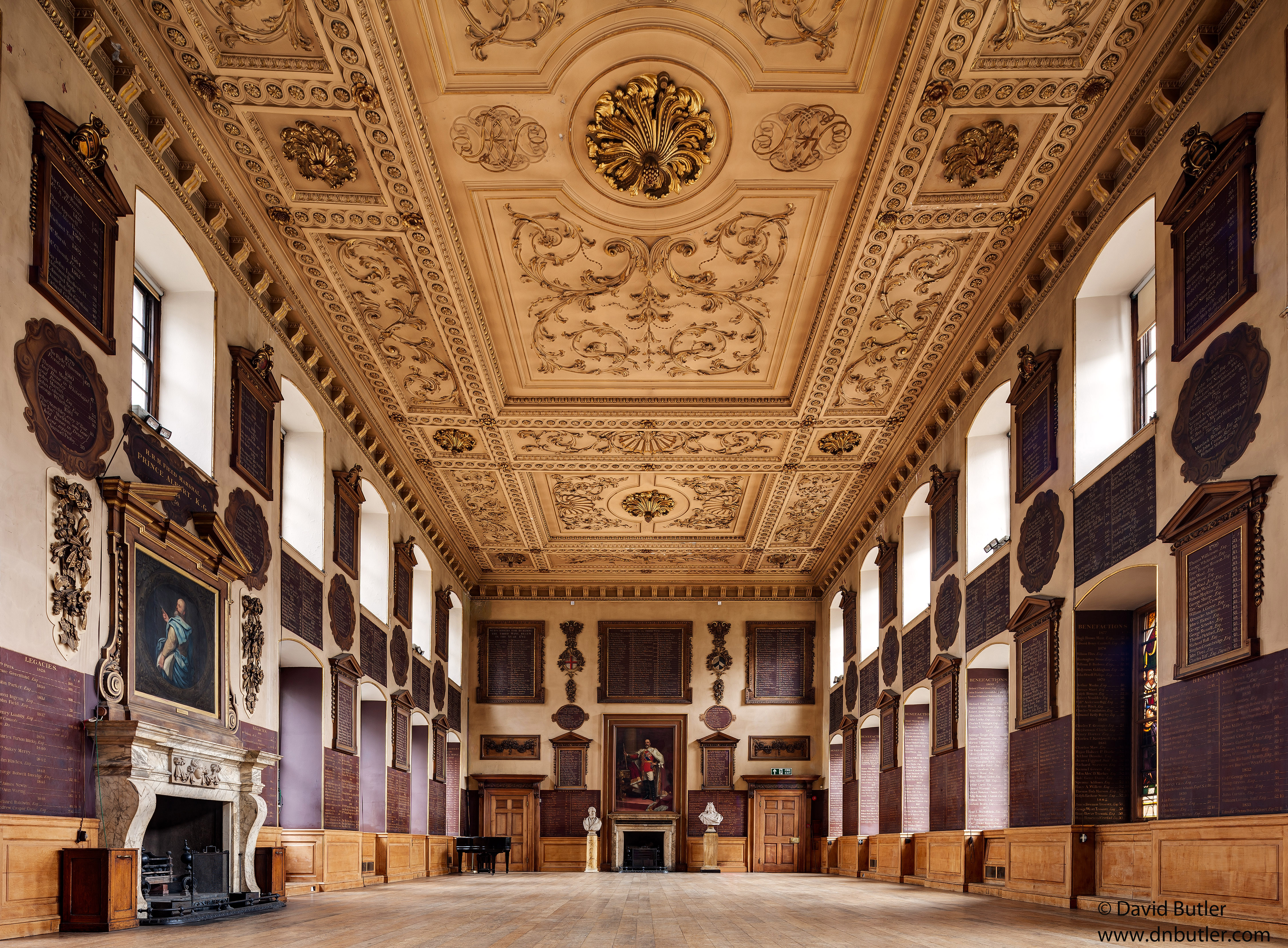
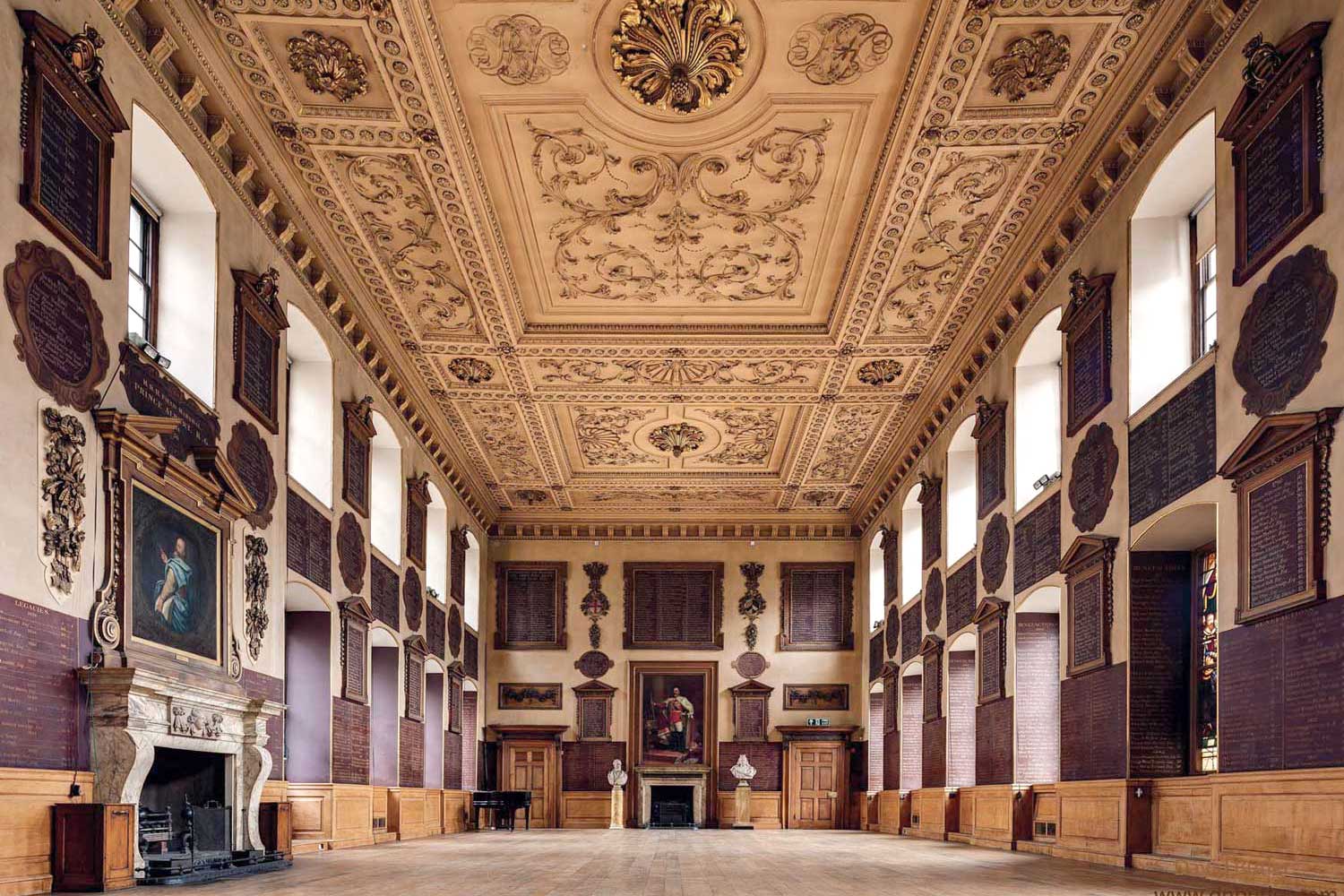
Without improvements to the disabled access, fire escapes, catering and toilets the superb 18th century Gibbs Barts Great Hall is at risk of decline, deterioration and decay. It will be unable to meet statutory requirements necessary for it to become a financially self-supporting Heritage Site, managed by a separate body, so preserving this unique cultural, medical, aesthetic and historical site.
The plans by the renowned architect Michael Hopkins for a Barts heritage quarter which have been approved by the City of London are threatened by a current application by the Trust to build a new Maggie’s Centre building abutting the Great Hall.
Construction of this building would prevent the Hopkins’ plans for essential improvements to the North Wing. The Hopkins plan also includes essential improvements of the storage conditions for the archive collections and their display.
I am not at all against Barts developing its cancer services-indeed a Macmillan Cancer Advice Unit is named after my late wife Dr Vicky Clement-Jones there- but the current plans for the Maggie's Centre are entirely inappropriate in the current form and I have laid an objection to these plans.
The only access for the disabled would thereafter only be through catering facilities at the West end of the Great Hall and very inconvenient access for them to toilets.
The Hopkins plans allow the building of a suitably designed Maggie's nearby.
Approval of the Maggie plans would mean that an opportunity to restore the Great Hall to its former symmetry and to modernise it's facilities to make it viable for future use and upkeep will be lost.
See the Friends of the Great Hall site for further info.
Government Rides to Rescue of Levy
With excellent timing in the Year of the Horse and just before the opening of the Cheltenham Festival, following pressure mainly from Coalition parties (Viscount Astor, Lord Mancroft, myself and others) and the Crossbenches (Viscount Falkland) the Government announced on Report Stage in the House of Lords that they would be inserting a new clause in the Gambling (Licensing and Advertising) Bill at Third Reading to enable the Horserace Betting Levy to be extended to include offshore bookmakers who do not currently pay the Levy. This has now taken place.
With the value of the Levy having fallen drastically in recent years (from £106m in 2003/4 to £66.7 m in 2012/13) this is very good news for horse racing which is this country's second most popular sport, with 5.6 attendees at events in 2012, and which makes a substantial contribution to the UK economy.